

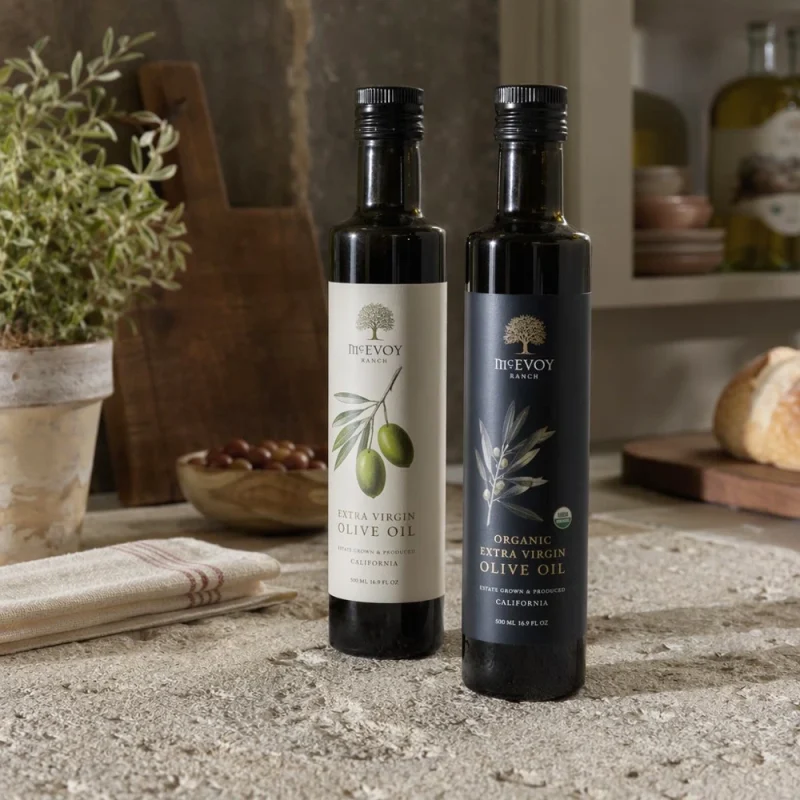
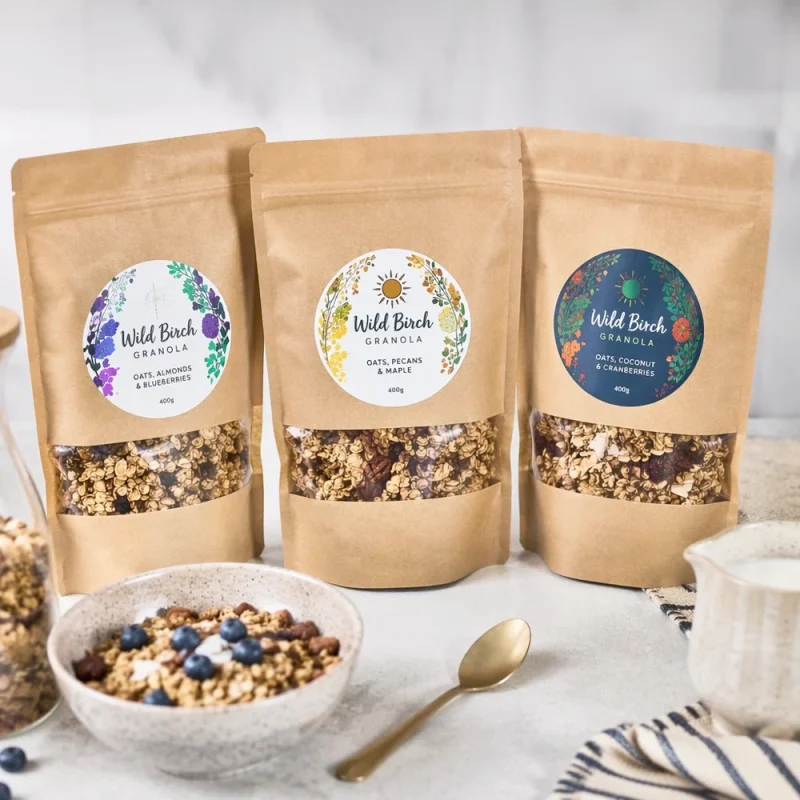
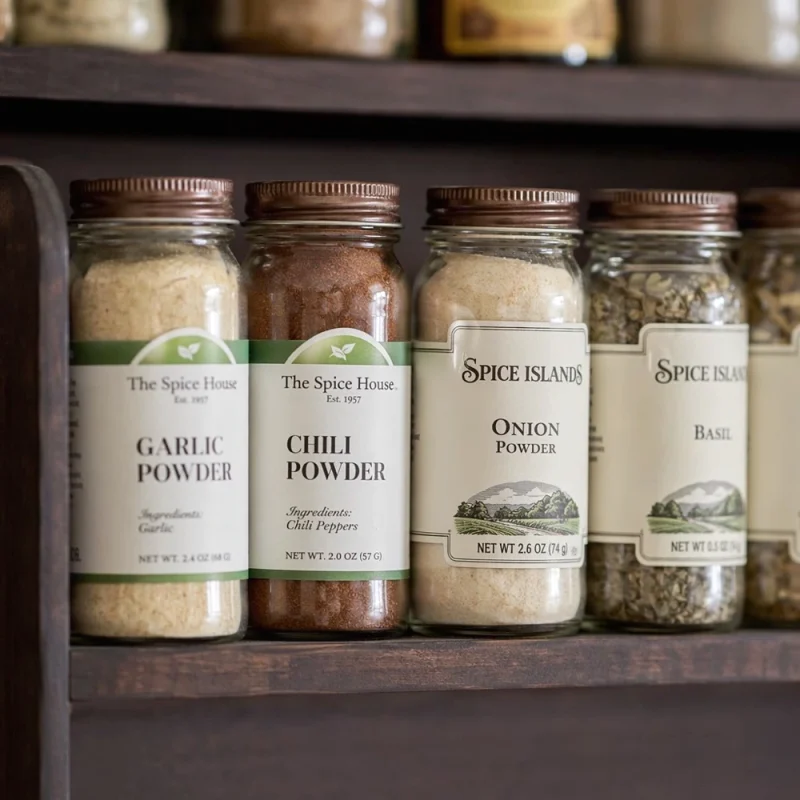
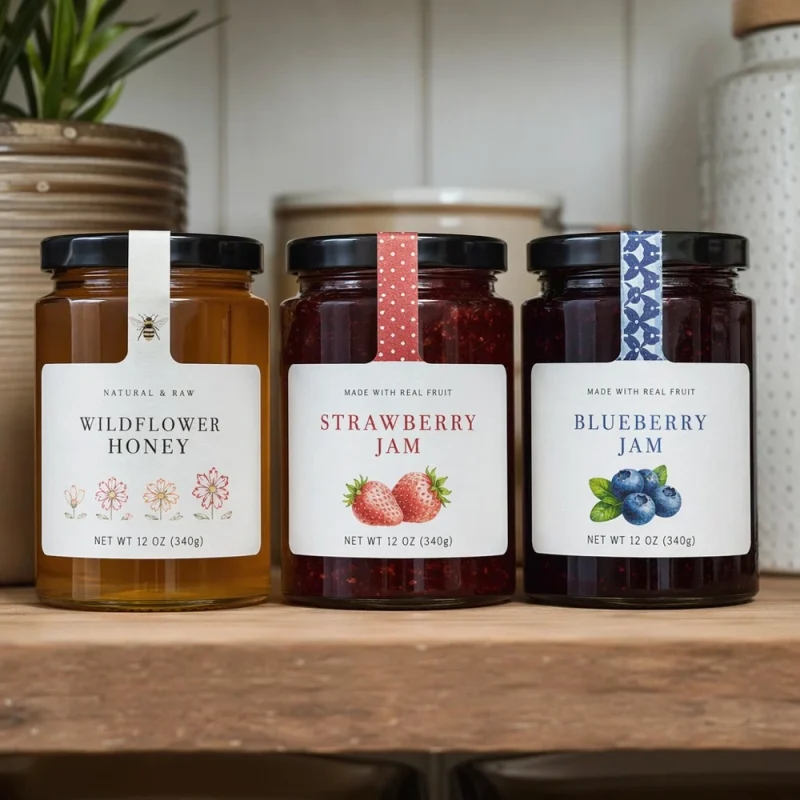
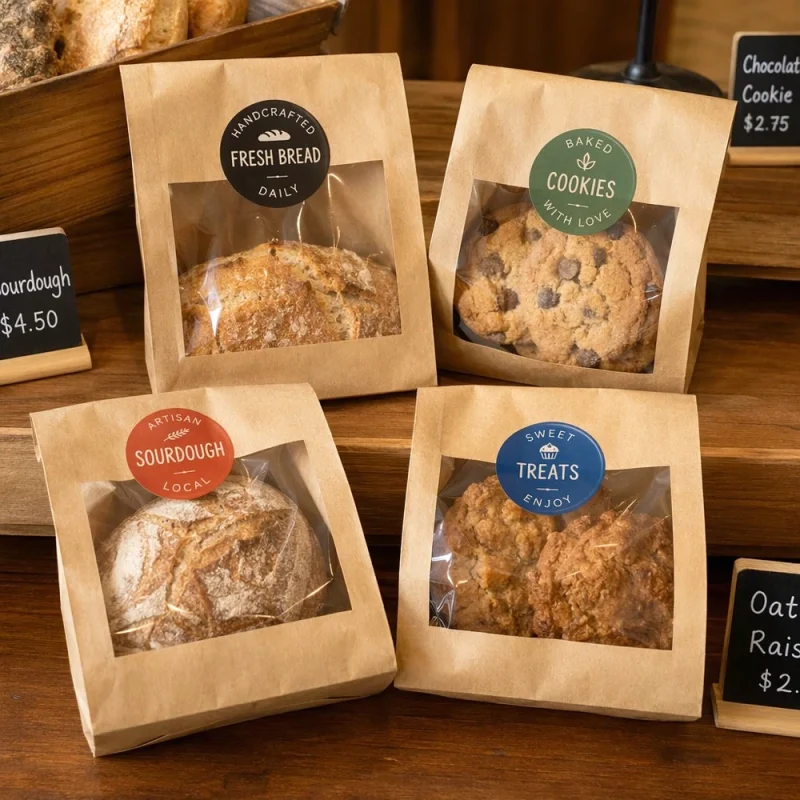
Custom Food Labels for Jars, Snacks, Fresh & Dry Food
Food-safe custom labels engineered for every packaging environment — glass jars, snack pouches, fresh trays, baked goods, and shelf-stable dry goods. FDA-compliant materials, food-safe adhesives, and finishes built to withstand moisture, oil, refrigeration, and freezer storage.
- FDA-compliant materials
- Food-safe adhesives
- No MOQ · 4-6 business days production
Custom food labels must use FDA-compliant materials and food-safe adhesives that withstand refrigeration, moisture, oil contact, and sometimes freezer storage. LabelsAgent helps food brands source food-grade labels from experienced Chinese factories — with material guidance for your specific packaging type, whether glass jars, flexible snack pouches, fresh food trays, or dry goods containers.
Food Packaging Applications
Six core food packaging categories with distinct material and adhesive requirements — each tested for real-world storage and distribution conditions.
Glass & Plastic Food Jars
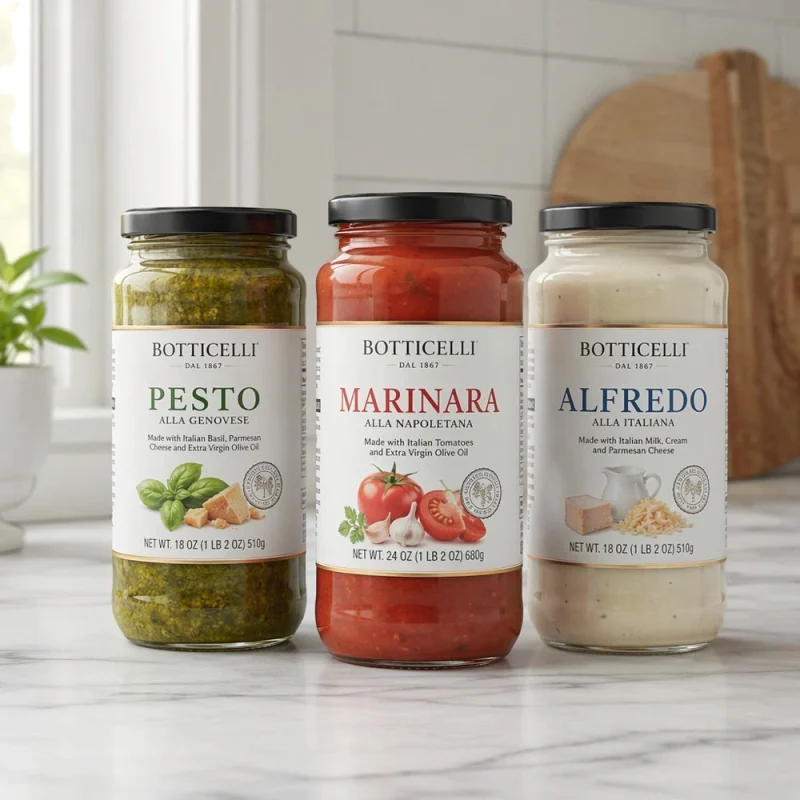
Jam, preserves, sauces, spreads, and condiment jars. Moisture-resistant BOPP or clear film for a clean shelf look.
BOPP · Clear FilmSnack Bags & Flexible Pouches
Chips, nuts, dried fruit, and granola pouches. High-speed roll application compatible with barrier films.
Roll Format · Permanent AdhesiveFresh Food Trays & Clamshells
Salad greens, berries, deli items, and ready meals. Freezer-safe and refrigeration-tolerant adhesives.
Freezer-Safe · Cold-TolerantBaked Goods Packaging
Bread bags, cookie boxes, pastry wrappers, and cake containers. Food-safe paper and kraft options.
Food-Safe Paper · KraftDry Food Containers
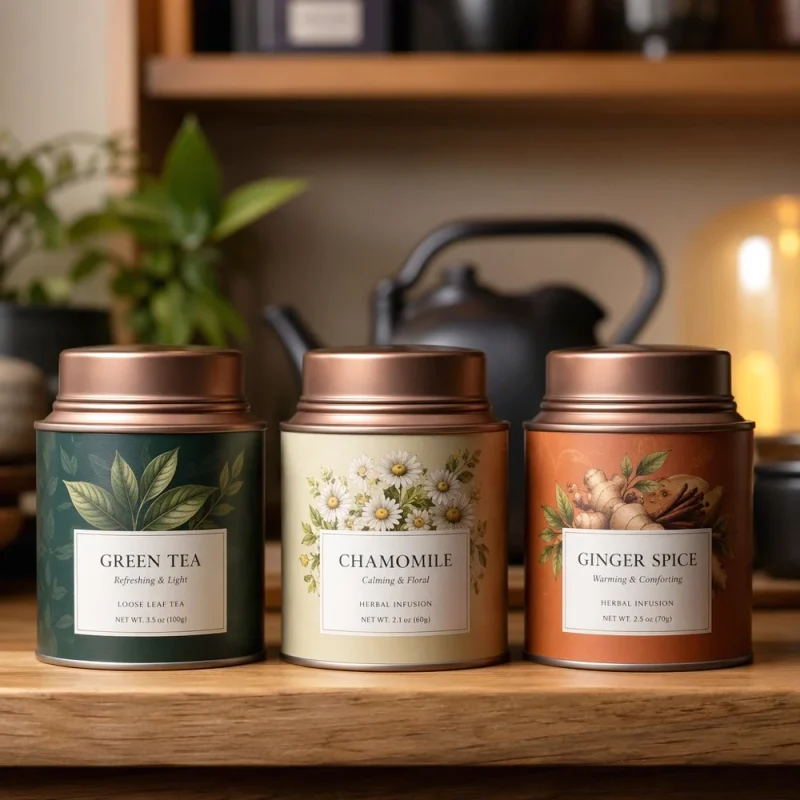
Cereal boxes, pasta, rice, flour, and spice jars. Cost-effective paper labels for shelf-stable products.
Paper · Room TempIngredient & Nutrition Labels
Back-panel information labels with small-text readability for ingredients, allergens, and nutrition facts.
High-Contrast Print · Small TextMatch the Label to the Storage Zone
Food packaging lives in six distinct environments. Each demands a specific combination of facestock, adhesive, and finish — getting this wrong means peeling labels, smudged text, and failed inspections.
Six Food Storage Zones · Six Material Recipes
Refrigeration (2-8 °C)
Condensation forms when jars move between cold storage and ambient retail. Labels must resist moisture and maintain adhesion on wet surfaces.
Freezer (-18 to -25 °C)
Frozen food labels must adhere at sub-zero temperatures without peeling, cracking, or losing print quality across freeze-thaw cycles.
Oil & Grease Contact
Sauce jars, dressing bottles, snack oils, and oil-rich foods degrade paper labels from the inside — seepage ruins text and graphics.
Moisture & Condensation
Wet environments — fresh produce, beverage-adjacent products, ice-packed items — demand waterproof facestocks and adhesives.
Room Temperature (Dry)
Shelf-stable cereals, pasta, rice, flour, and dry goods. The most forgiving environment — cost-effective paper labels perform well here.
Direct / Indirect Contact
Labels touching food surfaces — wraps, sandwich wedges, bakery direct-contact — must meet the strictest FDA compliance standards.
Food Packaging Label Challenges
Real-world failure modes we engineer against — and the proven material/adhesive solutions behind each fix.
| Challenge | Why It Matters | Recommended Solution |
|---|---|---|
| Moisture & condensation | Refrigerated food jars and fresh food trays sweat when moved between temperatures. | Waterproof BOPP or PET with moisture-resistant adhesive. |
| Oil & grease contact | Sauce jars, dressing bottles, and snack oils can degrade paper labels. | Oil-resistant coating on film material, or laminated paper. |
| Freezer storage | Frozen food labels must adhere at sub-zero temperatures without peeling. | Freezer-safe adhesive with film facestock. |
| Ingredient readability | Regulatory compliance requires clear, legible small text for allergens and nutrition. | High-contrast printing with appropriate font sizes on matte or gloss finish. |
| Food-safe compliance | Labels in direct or indirect food contact must meet FDA standards. | FDA-compliant materials and food-grade adhesives. |
| Flexible pouch compatibility | Snack pouches and barrier films require labels that bond to low-energy surfaces. | Permanent adhesive matched to pouch film type. |
Recommended Food Label Materials
Six proven facestocks covering every food packaging environment — from freezer-safe films to artisan kraft papers.
| Material | Best For | Notes |
|---|---|---|
| White BOPP | Jars, bottles, sauce containers, refrigerated food | Waterproof, oil-resistant, food-safe. Most versatile food label material. |
| Clear BOPP | Glass jars, premium food packaging, no-label look | Waterproof. Works well with white ink for opacity on transparent backgrounds. |
| White Paper | Dry goods, cereal boxes, pasta, shelf-stable food | Cost-effective for indoor, room-temperature packaging. Not moisture-resistant. |
| Brown Kraft Paper | Artisan food, organic products, bakery, farmers market | Natural look for handmade and organic food brands. Indoor use only. |
| White PET | Premium food containers, long-shelf-life products | Durable, water-resistant, and temperature-tolerant for demanding food environments. |
| Thermal Transfer Paper | Variable data food labels, batch codes, date coding | Accepts thermal transfer printing for expiry dates and lot numbers. |
Recommended Food Label Finishes
Protective finishes do double duty — they enhance shelf appeal and shield the label from the food environment it lives in.
Matte Laminate
Soft, natural finish popular with organic and artisan food brands. Reduces glare for ingredient readability.
Gloss Laminate
Shiny, vibrant finish that makes food photography pop on retail shelves. Good moisture barrier.
Waterproof Coating
Essential for refrigerated food, beverage-adjacent products, and food items stored in damp environments.
Oil-Resistant Coating
Prevents oil seepage from sauce jars, dressing bottles, and oil-rich food containers.
Freezer-Safe Adhesive
Maintains bond strength at sub-zero temperatures for frozen food packaging.
Varnish Finish
Cost-effective protective layer for dry food packaging at room temperature.
Food Label Format Options
Three delivery formats tuned to your production volume and application method.
Roll Labels
Best for food production lines and machine application. Compatible with automatic label applicators for jars, bottles, and pouches at scale.
Sheet Labels
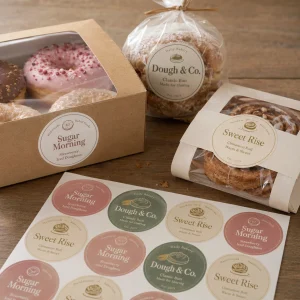
Ideal for small-batch food brands, farmers market packaging, and startup food products. Easy manual application.
Stickers
Brand seals, organic certification stickers, ingredient stickers, and promotional food packaging accents.
Food Label Design & Artwork Tips
Design decisions that make or break food labels — from regulatory readability to scannable barcodes.
Ingredient Text Readability
Use high-contrast colors and minimum font sizes for ingredient lists, allergen statements, and nutrition facts. Regulatory text must remain legible after printing and lamination.
Allergen Highlighting
Plan space for allergen declarations and bold allergen text. Confirm that your label layout leaves room for all required food information panels.
Barcode & QR Code Space
Reserve a flat, high-contrast area for barcodes and QR codes. Avoid placing scannable codes over curved jar surfaces or near seams.
Food Photography Reproduction
Use high-resolution images (300 DPI minimum) for food photos on labels. Gloss laminate enhances image vibrancy; matte laminate softens it.
Test Food Label Materials Before You Order
Five label materials sent to your door. $9 shipping credited to first order. Test adhesion on your actual food packaging — jars, pouches, trays — before committing to production.
Get Free SamplesBuilt for Food Brands That Need to Ship
Sourcing infrastructure tuned to the realities of food packaging — compliance, batch consistency, and shelf-ready turnaround.
FDA-Compliant Supply
Materials and adhesives documented for direct and indirect food contact. Compliance paperwork available per SKU.
DOC PER SKUMaterial Match By Zone
We map your product's storage environment to the right facestock, adhesive, and finish — no guesswork.
6 ZONES COVEREDNo MOQ Scaling
Start with sheet labels for farmers market batches, then graduate to roll labels as retail orders land.
FROM 1+ PCS4-6 business days Production
Standard food label orders ship in two to three business days after artwork approval. Rush slots available.
4-6 BUSINESS DAYSEnvironment Testing
Sample materials in your real storage conditions — freezer, condensation, oil contact — before going to production.
REAL-WORLD TESTMulti-Pack Co-Line
Run multiple SKUs in one production pass — ideal for food brands with flavor variants or seasonal launches.
SKU CONSOLIDATIONRelated Food & Beverage Label Pages
Food Label Frequently Asked Questions
Are these food labels FDA-compliant?
Yes. We offer FDA-compliant label materials and food-safe adhesives suitable for direct and indirect food contact packaging. Our team can recommend the appropriate material certification for your specific food product and target market.
Which label material is best for food jars?
White BOPP and clear BOPP are the most popular choices for food jars because they resist moisture, oil, and refrigeration. Paper labels can work for dry goods at room temperature but are not suitable for wet or refrigerated environments.
Can food labels withstand refrigeration and freezer storage?
Yes. We offer freezer-safe adhesives and moisture-resistant film materials that maintain adhesion and print quality in refrigerated and frozen environments. Be sure to tell us your storage temperature range so we can recommend the right adhesive.
Do you offer oil-resistant labels for sauce and dressing bottles?
Yes. Oil-resistant coatings and film materials like BOPP and PET are available for food products that involve oil contact, such as sauces, dressings, marinades, and oil-based condiments.
What is the minimum order quantity for food labels?
We support No-MOQ orders for small food brands and startups. Sheet labels are ideal for very small batches and sample runs, while roll labels offer better unit pricing for repeat production and larger quantities.
Get Custom Food Labels Matched to Your Packaging
Send us your food packaging details and artwork. We will recommend the right material, adhesive, finish, and format for your product — backed by FDA-compliant sourcing.
No reviews yet.
Write a Review
You must be logged in to post a comment.