

Label Material Comparison Table
Click any column header to sort. Ratings reflect real-world performance under typical product conditions.| Material | Water | Oil | UV / Outdoor | Tear | Best for |
|---|---|---|---|---|---|
| White BOPP | Food, beverage, cosmetic | ||||
| Clear BOPP | No-label clear look | ||||
| White PET | Premium & industrial | ||||
| Clear PET | Luxury clear bottles | ||||
| Silver PET | Premium metallic look | ||||
| White Paper | Dry indoor goods | ||||
| Brown Kraft | Natural eco brands | ||||
| Estate #8 / #9 | Wine, luxury textured | ||||
| White Vinyl | Outdoor, long-term | ||||
| Holographic | Promotional, decals |
BOPP, PET & Vinyl — The Films
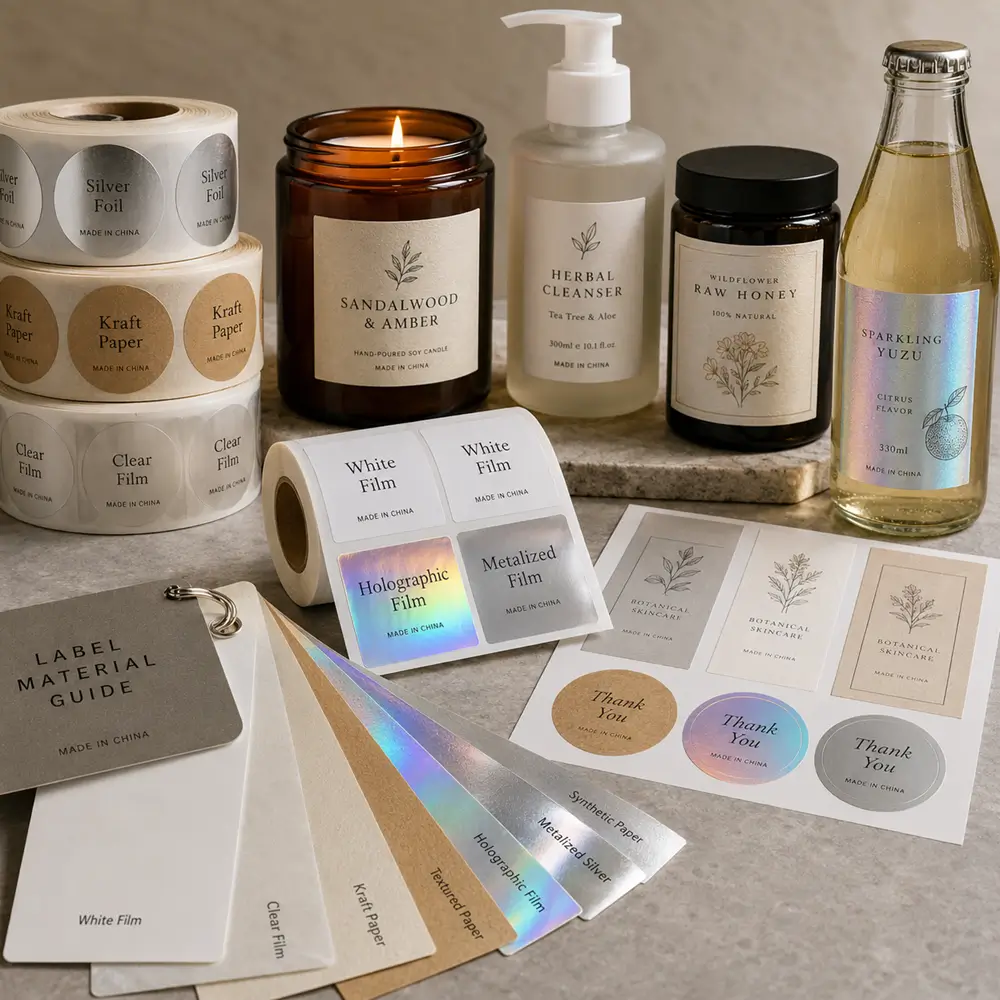
Synthetic films handle moisture, oil, refrigeration, and outdoor exposure that paper cannot. Each film family has a distinct performance and aesthetic profile.White BOPP
Mid-tierThe most versatile label material. Water-resistant, oil-resistant, tear-resistant, and produces vibrant CMYK color. Standard for beverage bottles, food jars, cosmetic containers.
Clear BOPP
Mid-tierTransparent "no-label" look on clear or glass containers. Popular for premium beverage, cosmetic, and skincare. Light-color text needs a white ink underprint layer.
White PET
Upper-tierStronger, more rigid, more heat-resistant than BOPP. Premium feel for luxury and industrial. Used for high-end cosmetic, supplement, and scuff-prone industrial products.
Clear PET
Upper-tierPremium transparent film for high-end glass bottles — wine, spirits, luxury skincare. Thicker and more rigid than Clear BOPP, with a tactile premium feel.
Silver PET
Upper-tierMetallic silver film for industrial and promotional labels. Used for hardware, automotive, chemical products needing a metallic look without foil stamping.
White Vinyl
Top-tierThe outdoor and durability champion. UV-resistant, waterproof, durable for 12+ months of outdoor exposure. Standard for outdoor stickers, window decals, equipment labels.
Paper Labels — Cost-Effective & Natural
Papers win on cost, tactile feel, and eco aesthetic. They lose on water, oil, and outdoor exposure — pick them for dry indoor applications.White Paper
EconomyMost cost-effective label material. Best for dry indoor packaging — boxes, mailers, dry food, office labels. Not water-resistant.
Brown Kraft
EconomyNatural uncoated paper with warm brown tone. Standard for organic, handmade, artisan brands. Popular with Etsy sellers, indie beauty, craft coffee. Not water-resistant.
Estate #8 / #9
Upper-tierPremium textured paper with laid finish. Estate #8 is cream-toned, Estate #9 is white. Used for wine labels, luxury candle packaging, specialty food. Not waterproof. See Textured Paper Labels for current uses, finish choices and ordering guidance.
Holographic, Metalized & Specialty Films
Eye-catching and functional specialty materials for promotional, decorative, and variable-data applications.Holographic Vinyl
Upper-tierRainbow-effect prism film for eye-catching promotional stickers, kids products, decorative decals.
Metalized BOPP
Mid-tierSilver-shine film for cost-effective metallic look — promotional bottle labels, event branding.
Thermal Transfer Paper
EconomyPaper with coating for thermal-transfer printing — batch codes, date printing, variable data on production lines.
Three Questions. One Recommendation.
Tell us about your product environment. We'll match the right material in real time — no form submission required.Find your material
Pick the option in each box that best matches your product. The recommender runs instantly when all three are selected.How to Choose Your Label Material
Six concrete questions to walk through before placing your order. Skip none — each one eliminates materials that won't perform.- 1
Identify your packaging surface
Glass, plastic, metal, paperboard, flexible pouch — different surfaces bond differently. A film that lays flat on glass may lift or peel on a flexible pouch. - 2
Identify your product environment
Water, oil, refrigeration, freezer, heat, UV sunlight, repeated handling — each points to specific materials. Be honest about the worst-case condition, not the typical one. - 3
Identify your brand positioning
Premium luxury, natural eco-friendly, promotional, or minimalist clinical — each suggests different materials and finishes. Estate paper signals heritage; clear PET signals modern luxury. - 4
Identify your application method
Machine applicator, manual hand application, or sticker giveaway? Format drives material form factor — rolls for machine, sheets for hand, die-cut for stickers. - 5
Identify your budget tier
Cost-effective paper < BOPP film < PET film < textured estate paper < vinyl. Foil stamping, white ink, and soft-touch add cost but deliver premium shelf impact. - 6
Request a free sample pack
The fastest way to choose is to feel materials in person. Order a free sample pack — 5 materials, $9 shipping, credited to your first order.