

Custom White Ink Labels for Clear & Transparent Glass and PET
White ink underprint on clear BOPP and PET film makes light colors and white text punchy and opaque. The essential layer behind the premium no-label look used by cosmetic, skincare, beverage, and luxury brands.
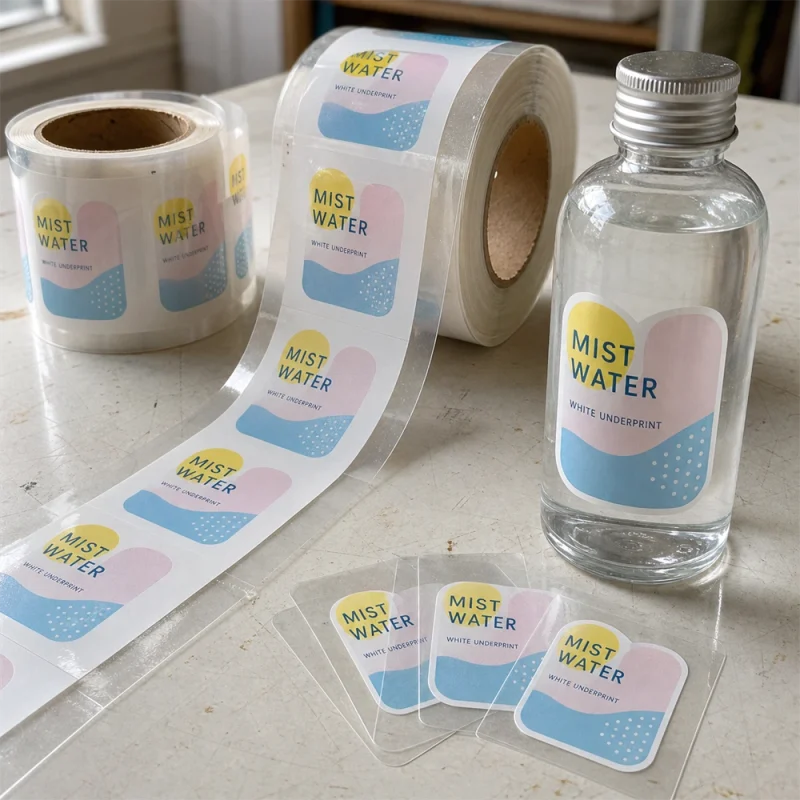
White ink is the essential underprint layer on clear film — without it, light CMYK colors vanish into transparency. With it, every shade turns opaque, vivid, and ready for the premium no-label look on glass.
When You Need White Ink Labels
Seven design and packaging scenarios where white ink underprint is not optional — it is the difference between invisible and iconic.
Clear Cosmetic Bottles
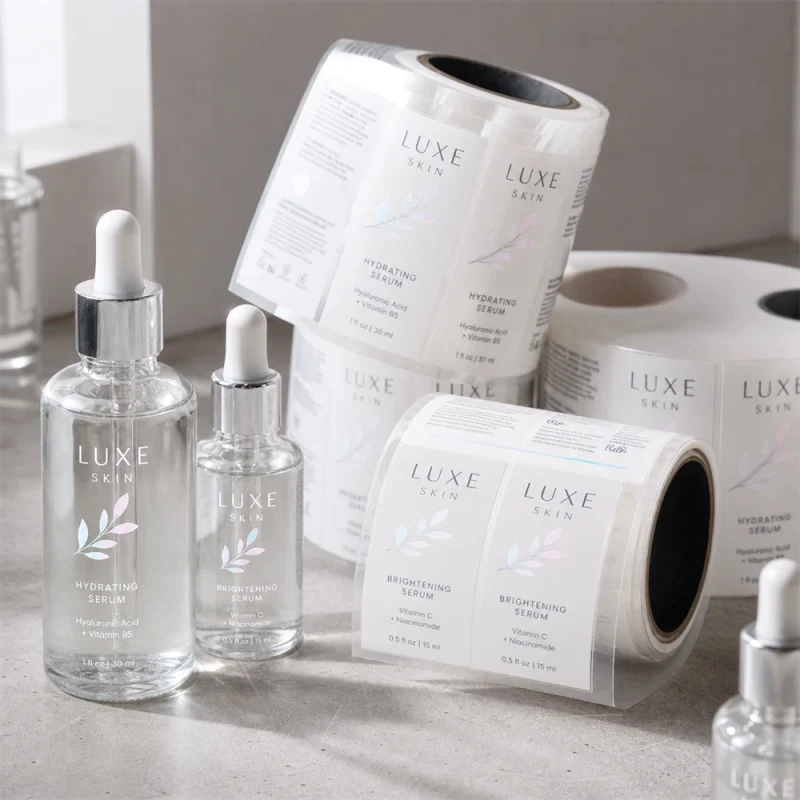
Serum droppers, toner bottles, essence bottles on clear glass or PET. White text and light-color design elements need a white underprint layer to be readable.
EssentialPremium Beverage Bottles
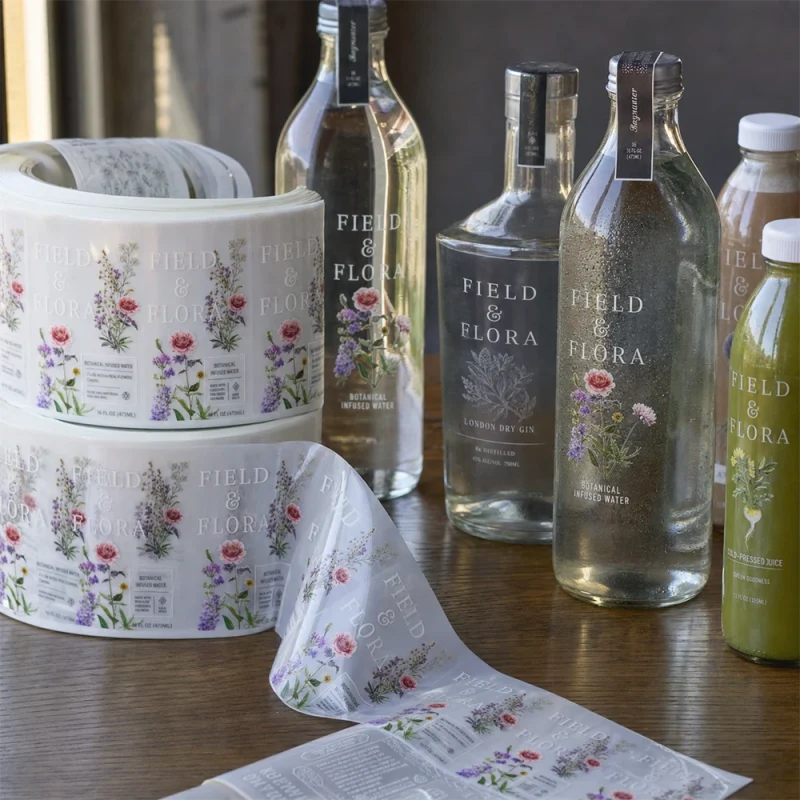
Premium water, spirits, wine, craft beer, cold-pressed juice on clear glass. White ink creates a clean, high-end look that appears printed directly on the glass.
EssentialNo-Label Look Packaging
Brands seeking the premium effect where the label is invisible and only the design appears on the container. Clear film + white ink + CMYK = the no-label look.
PremiumClear PET Containers
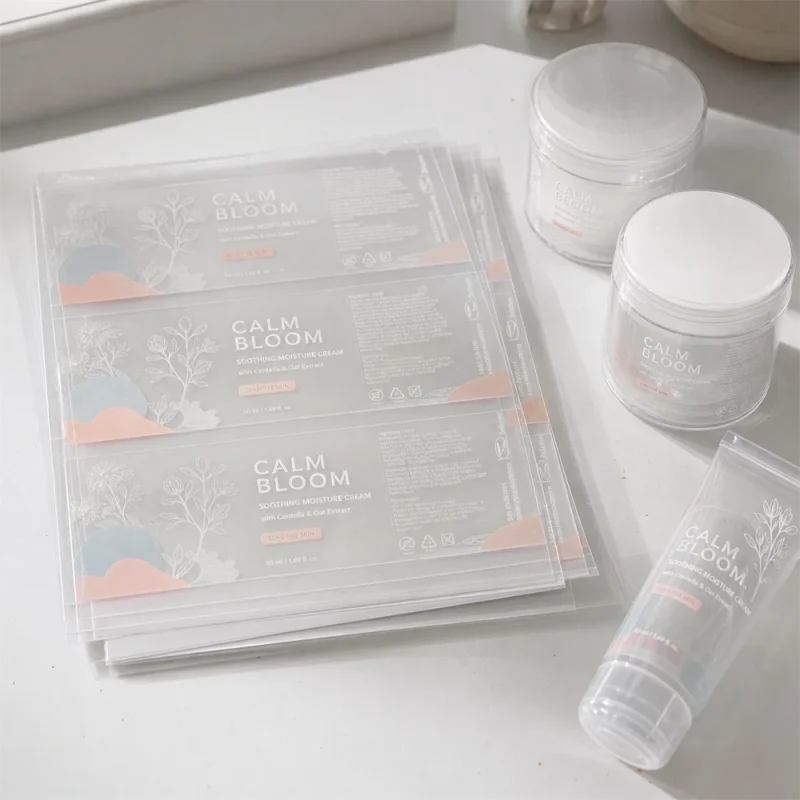
Clear plastic jars, tubs, tubes, and clamshell packaging where the product is visible through the container. White ink ensures label text is legible against the transparent background.
StandardLight-Color Brand Designs
Brand identities that use white, pastel, or light-color logos and text. These colors require a white ink underprint on clear film or they will be barely visible.
StandardFoil + White Ink Combination
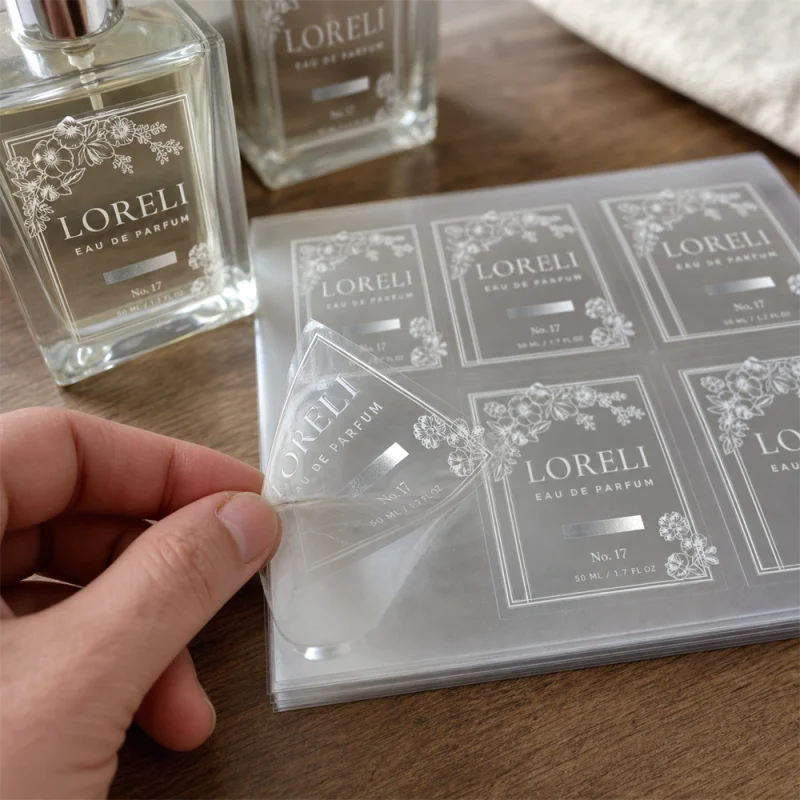
Premium labels that combine gold or silver foil accents with white ink and CMYK on clear film. The layered effect creates a high-shelf-appeal product label.
LuxuryGradient & Transparency Effects
Designs that use partial white ink coverage to create areas of opacity next to areas of transparency, producing sophisticated visual gradients on glass containers.
StandardEngineered for Clarity, Opacity, and Layered Premium Effects
Three studies that decode how white ink interacts with clear film, CMYK, lamination, and foil — and why a single underprint layer is the foundation of every premium transparent label.
Materials for White Ink Labels
Five transparent and metallic film substrates engineered for white ink underprint — from the workhorse Clear BOPP to luxury Clear PET and the foil-combo construction.
Where White Ink Labels Perform Best
Eight categories where white ink underprint on clear film is the industry-standard foundation for premium shelf presence.
Beauty & Cosmetics
Serum bottles, toner bottles, essence droppers, foundation bottles. No-label look on clear glass.
Beverage
Premium water, spirits, vodka, gin, craft beer, cold-pressed juice. Clean look on clear glass.
Skincare
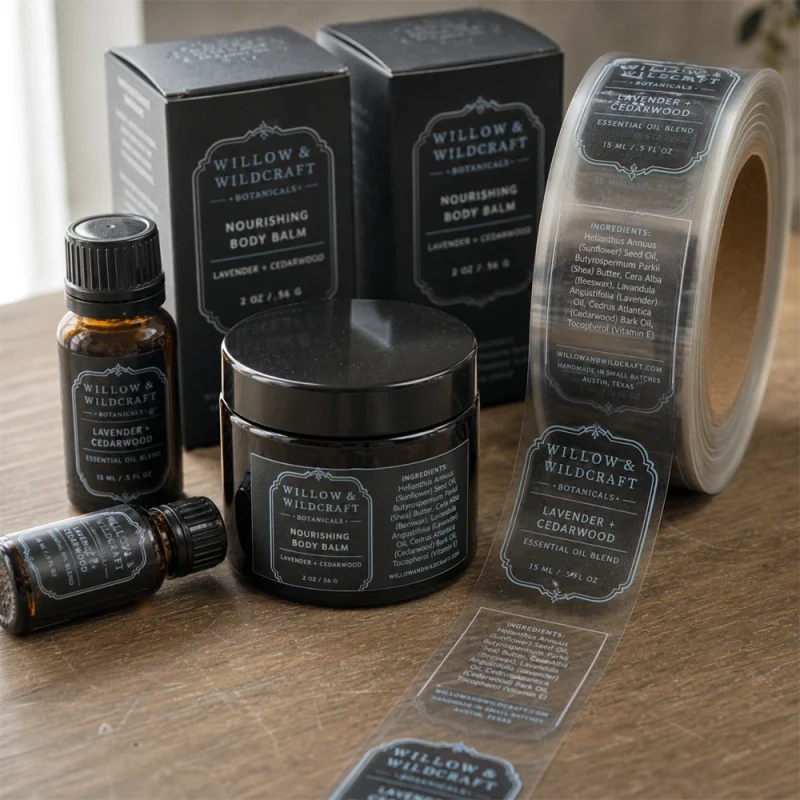
Moisturizer jars, eye cream jars, mask tubes. White text and ingredient lists readable on clear containers.
Food & Gourmet
Honey jars, olive oil bottles, specialty sauce bottles. Premium transparent packaging appearance.
Perfume & Fragrance
Clear perfume bottles where white text and design create a minimalist, luxury appearance.
Essential Oils
Clear essential oil bottles. White ink on clear PET provides legible labels with a clean look.
Retail & Display
Window decals, display stickers, and retail shelf labels on glass surfaces using white ink for opacity.
Wine & Spirits
Front labels on clear wine and spirit bottles where the product color shows through transparent areas.
Understanding White Ink Label Performance
Six technical realities that govern how white ink behaves on clear film — and how to specify labels that perform on the shelf and in the customer's hand.
White Ink Is Essential on Clear Film
CMYK ink is semi-transparent by design. On clear film, light colors (especially white, yellow, pink, light blue) are barely visible without a white underprint layer. If your design includes any light colors on clear BOPP or PET, white ink is not optional — it is required for visibility.
CriticalOpacity Levels Vary
White ink opacity depends on printing method and number of passes. Digital printing typically achieves good opacity in one pass. For maximum opacity on solid white areas, multiple white ink layers (double-hit) may be needed. Discuss opacity requirements with our team.
Spec-DependentPartial White Ink for Gradient Effects
White ink does not have to cover the entire label. By applying white ink only to specific areas, designers can create transparent zones and opaque zones on the same label. Popular for premium beverage labels where product color shows through selective transparent areas.
StandardArtwork Setup Requires Layers
White ink labels require the white layer to be set up as a separate spot color or separate layer in the artwork file. The design team must indicate exactly where white ink should be printed. We provide artwork guidelines and prepress checking for white ink label projects.
Prepress RequiredLamination Protects White Ink
White ink can be susceptible to scuffing on film surfaces. A gloss or matte laminate over the printed label protects the ink from abrasion during shipping, handling, and use. Lamination is recommended for beverage and cosmetic white ink labels.
StandardWhite Ink + Foil Combination
White ink, CMYK, and hot foil can be combined on clear film for the most premium label effect. The design layers are: clear film base, white ink underprint, CMYK color, and foil accents. This creates multi-layered visual depth used by luxury beauty and spirit brands.
Premium ComboBuyer Mistakes with White Ink Labels
Six pitfalls we see repeatedly — and how to avoid them when specifying your next clear film label project.
Skipping White Ink on Clear Labels
The most common and most visible mistake. Printing a design with light colors directly on clear film without white ink underprint results in text and design elements that are barely visible. Always include white ink when printing light colors on transparent material.
Most CommonNot Setting Up White Layer in Artwork
White ink requires a separate white layer in the artwork file. If the white layer is not properly set up, the printer cannot know where to apply white ink. Always follow white ink artwork guidelines or let our prepress team set up the white layer for you.
ArtworkExpecting 100% Opacity from One Pass
Single-pass white ink may not achieve 100% opacity, especially on large solid white areas. A slight tint of the product color may show through. For critical opacity requirements, specify double-hit white ink in your quote.
SpecChoosing Clear Label Without Considering Product Color
The product inside the container affects label readability. A dark-colored product behind a clear label with white text creates good contrast. A light-colored product behind white text reduces contrast. Consider the fill color when designing clear labels.
StandardForgetting Lamination
White ink on clear film can scuff during shipping and handling without protection. For beverage and cosmetic labels that will be handled repeatedly, always specify a laminate or UV coating over the printed ink.
StandardAssuming All Printers Do White Ink Well
White ink printing requires specific equipment and expertise. Not all label printers can produce high-opacity, consistent white ink. LabelsAgent works with factories experienced in white ink printing on clear film for premium brands.
Vendor ChoiceWhite Ink Artwork Tips
Four prepress essentials to ensure your white ink label prints exactly as designed.
Set Up White as a Separate Layer
White ink must be a dedicated spot color or separate layer in your artwork file — not part of CMYK. Our prepress team can set this up if needed.
Indicate Where White Should Print
Clearly mark which design elements require white ink underprint. Areas without white will remain transparent on the clear film.
Specify Double-Hit for Solid Areas
For large solid white areas, request double-hit white ink in your quote. This achieves 95%+ opacity for critical luxury labels.
Add Lamination for Handled Labels
Beverage and cosmetic labels that will be handled repeatedly need gloss or matte lamination over white ink to prevent scuffing.
How Your White Ink Labels Are Made
A three-step process from artwork to delivery — engineered for high-opacity, repeatable white ink printing on clear film.
Artwork & Prepress
Submit your design or let our prepress team set up the white ink layer. We confirm opacity level, double-hit requirements, lamination, and foil accents before printing.
White Ink + CMYK Printing
White underprint lays down first on clear BOPP or PET film, followed by CMYK color, lamination, and optional hot foil stamping on calibrated digital presses.
QC & Shipping
Opacity checks, registration verification, and adhesion testing on every roll. Packed for cosmetic filling lines or beverage bottling lines, shipped in 5–9 business days.
White Ink Label FAQ
Five questions buyers ask before specifying a white ink label project on clear film.
What is a white ink label?
A white ink label uses a layer of opaque white ink printed underneath colored ink on a transparent film face stock such as clear BOPP or clear PET. The white underprint creates an opaque base that makes light-colored text and graphics visible and vivid against the transparent background.
Without this white layer, light-colored inks would be nearly invisible on clear film. White ink labels are the foundation of the premium no-label look used by cosmetic, skincare, beverage, and luxury brands.
Why do I need white ink on clear labels?
CMYK ink is inherently semi-transparent to allow color mixing. When printed directly on clear film, light colors like white, yellow, pink, light blue, and pastel shades become nearly invisible because the transparent ink allows the background to show through.
The white ink underprint layer creates an opaque, solid base that blocks the background and makes all printed colors appear accurately and vividly. This is essential for any label design with light colors on transparent material.
Can white ink labels be waterproof?
Yes. White ink is printed on clear BOPP or clear PET film, both of which are inherently waterproof materials. With permanent acrylic adhesive and optional gloss or matte lamination, white ink labels are fully waterproof and suitable for beverage, cosmetic, and bath product applications.
The lamination also protects the white ink from scuffing during handling.
What is the no-label look?
The no-label look is a premium packaging effect where a clear film label with white ink and CMYK printing appears as if the design is printed directly on the glass or plastic container. The transparent film is invisible to the eye, and only the white and colored ink design elements are visible.
This creates a seamless, high-end appearance that makes the product look more expensive and the packaging more sophisticated. It is widely used by premium water brands, spirit brands, skincare lines, and fragrance houses.
Can I combine white ink with foil stamping?
Yes. White ink underprint, CMYK color printing, and hot foil stamping can all be combined on clear BOPP or clear PET film. This creates a layered, multi-dimensional premium look: transparent areas show the product color, white ink provides opacity for text and graphics, CMYK adds full-color elements, and foil adds metallic shine to selected accents.
This combination is used by the most premium beauty, fragrance, and spirit brands for maximum shelf impact.
No reviews yet.
Write a Review
You must be logged in to post a comment.