

Custom White PET Labels for Premium Durability & 150°C Heat
White PET (polyethylene terephthalate) is the strongest standard film label we offer — outperforming BOPP in tensile strength, heat resistance, and dimensional stability. Engineered for hot-fill beverages, industrial chemicals, pharmaceuticals, and premium personal care where label failure is not an option.
Six Engineering Properties That Set White PET Apart
PET is chosen when other films fail. These are the six characteristics that make it the premium substrate for demanding packaging environments.
High Heat Resistance
Withstands service temperatures up to 150°C for hot-fill lines and industrial environments where BOPP softens and deforms.
Superior Tensile Strength
Higher rigidity and tear resistance than BOPP. Resists stretching, tearing, and deformation under mechanical stress.
Moisture & Water Barrier
Fully water-resistant film that performs in wet, humid, and condensation-heavy environments including ice buckets and refrigeration.
Chemical Stability
Resists many solvents, oils, and industrial chemicals — suitable for aggressive-use industrial and pharmaceutical labeling.
Scratch & Scuff Resistance
Hard surface film resists scuffing during transit, handling, and retail display — critical for premium shelf appearance.
Dimensional Stability
Maintains shape and size across temperature swings. Prevents label wrinkling, flagging, and edge lift on rigid containers.
White PET vs White BOPP vs White Vinyl vs Brown Kraft
How White PET compares to the three most common alternative substrates across the attributes that drive field performance.
| Attribute | White PET | White BOPP | White Vinyl | Brown Kraft |
|---|---|---|---|---|
| White PET | Premium | Standard | Outdoor | Paper |
| Heat Resistance | ★★★★★ up to 150°C | ★★★★★ up to 70°C | ★★★★★ up to 90°C | ★★★★★ up to 60°C |
| Tensile Strength | ★★★★★ Very high | ★★★★★ Moderate | ★★★★★ Moderate | ★★★★★ Low (paper) |
| Water Resistance | ★★★★★ Full barrier | ★★★★★ Full barrier | ★★★★★ Full barrier | ★★★★★ None |
| Chemical Resistance | ★★★★★ Excellent | ★★★★★ Moderate | ★★★★★ Good | ★★★★★ Poor |
| UV / Outdoor | Limited | Not rated | UV-rated | Not rated |
| Scratch Resistance | ★★★★★ Hard surface | ★★★★★ Soft | ★★★★★ Good | ★★★★★ Coated only |
| Cost Position | Premium $$$ | Economy $ | Mid $$ | Economy $ |
| Best Use | Hot-fill, chemical, pharma | Standard beverage, food | Outdoor, prolonged UV | Natural, eco, handmade |
Service-Temperature Range, Visualized
Why White PET wins on hot-fill lines: it survives the −40°C freezer-to-150°C fill-temperature swing that BOPP, Vinyl, and Kraft cannot.
Eight Packaging Categories That Demand White PET
From hot-fill bottling lines to aggressive chemical environments, these are the applications where PET's premium price pays for itself in field reliability.
Hot-Fill Beverage Bottles
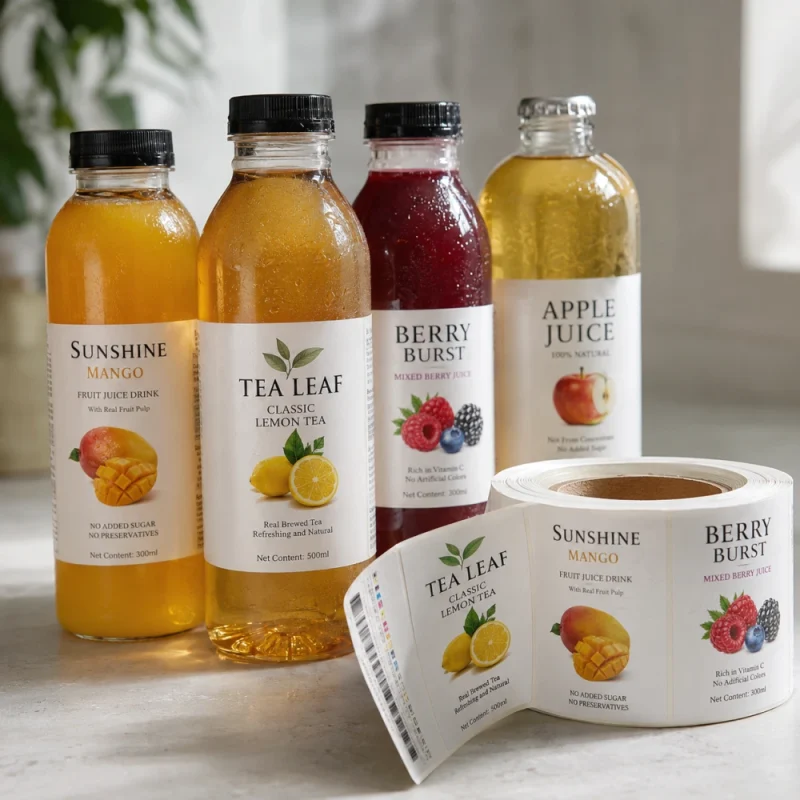
Juice, tea, sports drinks filled at 80–90°C. PET survives the fill line where BOPP deforms.
Industrial Chemical Containers
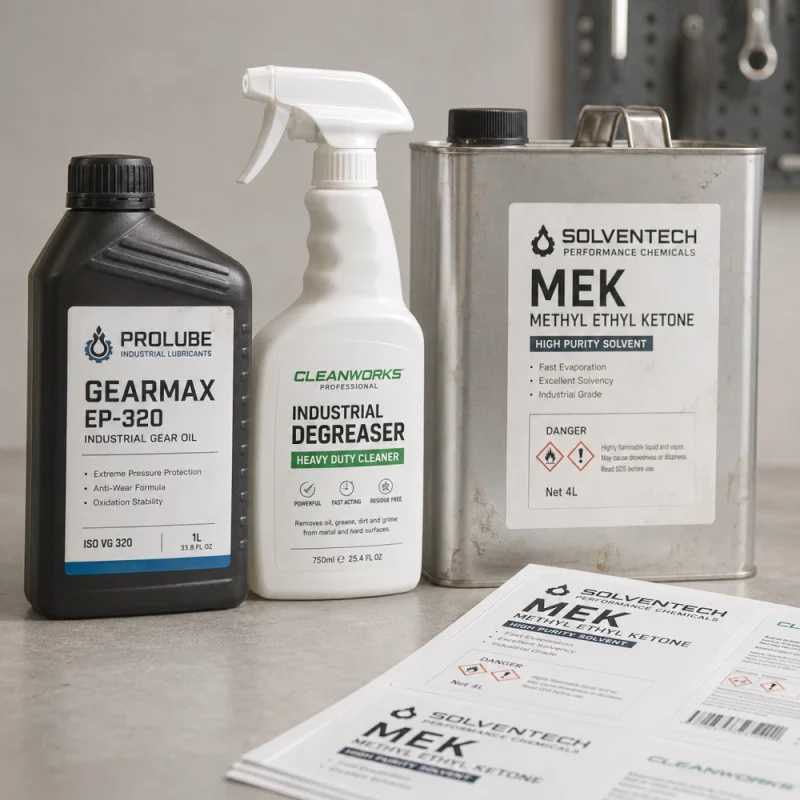
Lubricants, solvents, cleaners. Chemical stability prevents ink bleed and label degradation.
Pharmaceutical Bottles
Drug containers requiring durable, legible, compliant labeling that survives handling and storage.
Premium Cosmetics
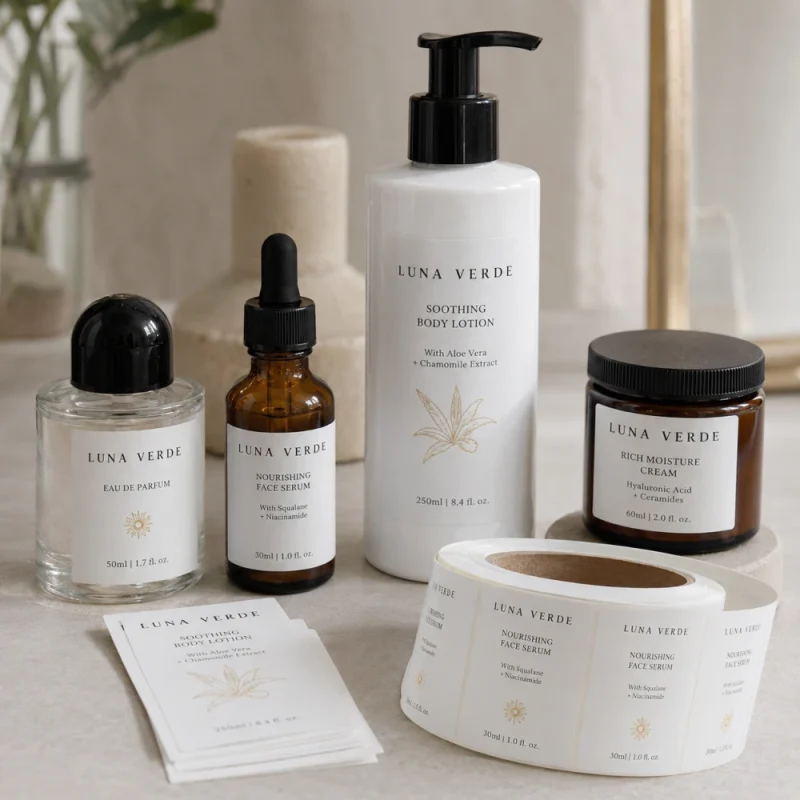
High-end skincare, fragrance, beauty packaging demanding superior shelf appearance and feel.
Nutritional Supplements
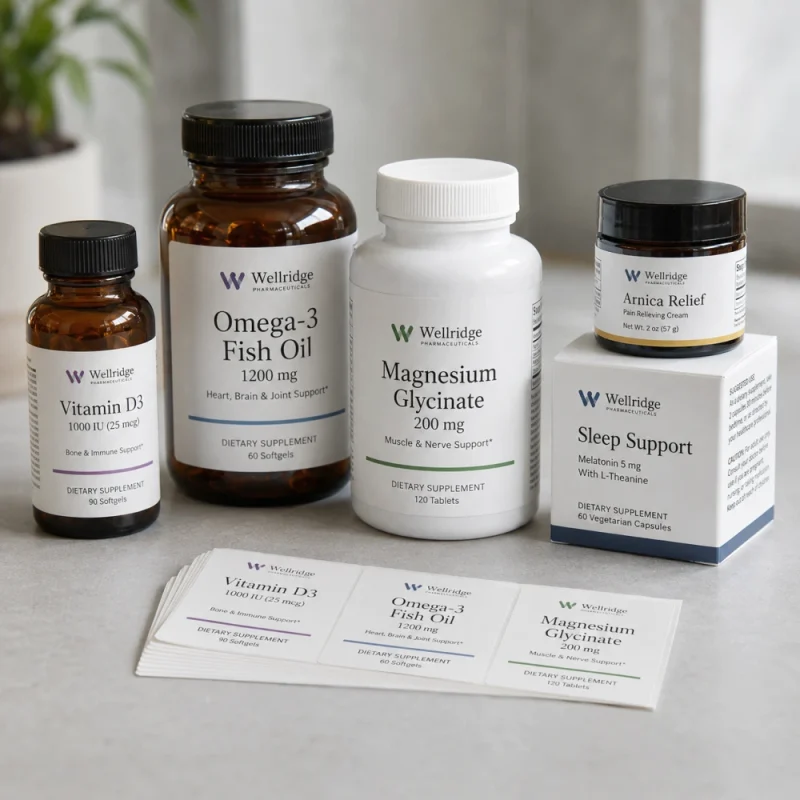
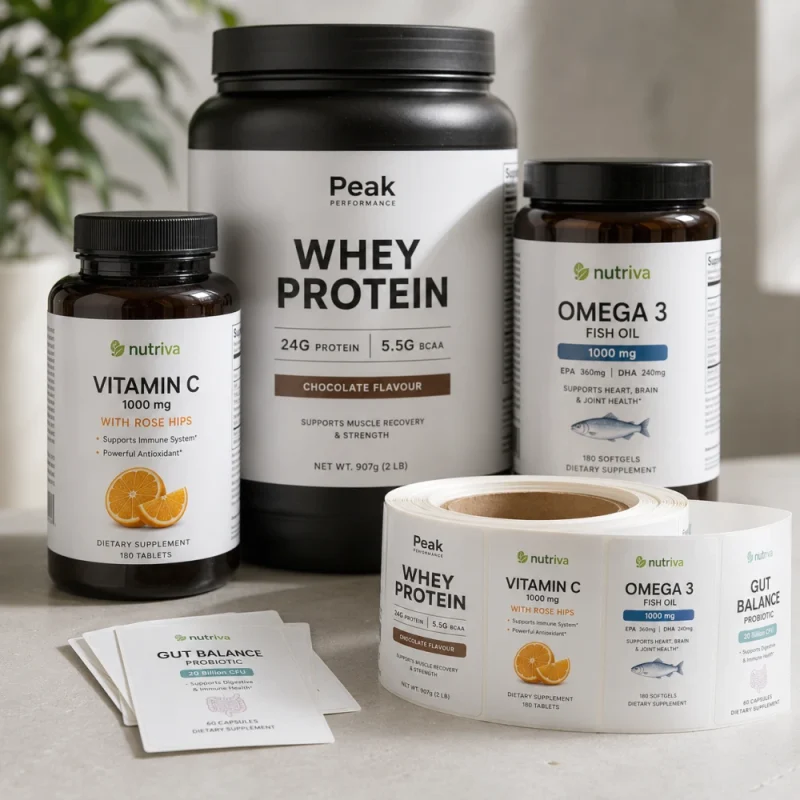
Protein tubs, vitamin bottles, health products needing rigid, scuff-resistant labeling.
Personal Care Products
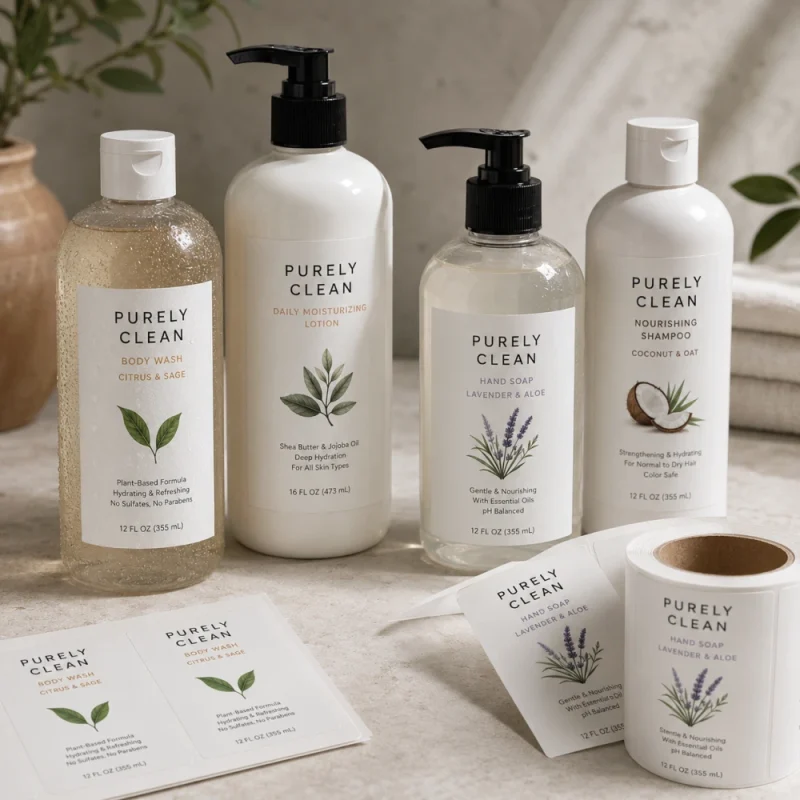
Shampoo, body wash, lotion containers with moisture and oil-resistance requirements.
Food Packaging
Sauce bottles, condiments, specialty foods exposed to moisture, oil, and refrigeration.
Automotive Labels
Motor oil, antifreeze, automotive fluid containers requiring chemical and heat resistance.
White PET Material Specifications
Technical data, production parameters, and available adhesive and finish options for White PET label projects.
| Property | White PET Specification |
|---|---|
| Water Resistance | Yes Fully water-resistant barrier |
| Oil Resistance | Yes Excellent oil & solvent resistance |
| Tear Resistance | Very High Strongest standard label film |
| UV / Outdoor Use | Limited Better than BOPP, not UV-rated |
| Temperature Range | −40°C to 150°C service temperature |
| Print Methods | Digital CMYK, flexographic, UV inkjet, screen print |
| Typical MOQ | 500 labels (rolls) · 100 labels (sheets) |
| Production Time | 4-6 business days after proof approval |
| Adhesive Options | Permanent, removable, high-tack, oil-resistant, freezer-safe |
| Finishes Available | Matte, gloss, foil, spot UV, lamination, waterproof coating |
Eight Finishes Engineered for White PET
From premium soft-touch for luxury beauty to chemical-resistant overcoats for industrial packaging, these finishes extend PET's already strong performance.
Matte Lamination
Premium non-glare finish for sophisticated brand presentation.
Gloss Lamination
High-shine finish maximizing color vibrancy and shelf impact.
Foil Stamping
Gold, silver, rose gold foil for premium metallic accents.
Spot UV
Selective high-gloss coating for design contrast and logo highlight.
Soft-Touch Coating
Velvety tactile surface for luxury cosmetic and personal care brands.
Chemical-Resistant Overcoat
Extra barrier for industrial and chemical product labeling.
Waterproof Coating
Maximum moisture protection for submerged or condensation environments.
Embossing
Raised design elements for premium tactile brand detailing.
When White PET Is — and Isn't — the Right Call
Honest engineering guidance. PET is a premium substrate; if your application doesn't need its strengths, a less expensive material will serve you better.
Choose White PET When
- Hot-fill beverage production at 80°C or higher — ideal, handles up to 150°C.
- Industrial or chemical product label requiring excellent chemical stability.
- Premium cosmetic needing superior shelf durability and appearance.
- Pharmaceutical requiring scratch-resistant, scuff-free compliant labeling.
- Rigid container (glass, hard PET bottle, tub) where dimensional stability matters.
Do NOT Choose White PET When
- Budget-sensitive standard beverage — consider White BOPP for cost savings.
- Outdoor prolonged UV exposure — choose White Vinyl for UV-rated durability.
- Natural, organic, eco branding — pick Brown Kraft for authentic texture.
- Squeeze and flexible tubes — BOPP's conformability prevents flagging.
Four Scenarios Where White PET Is the Wrong Choice
White PET is a premium substrate. These are the four common scenarios where specifying PET over-engineers the label and wastes budget — with the better alternative called out for each.
Budget-Sensitive Standard Applications
White PET costs more than White BOPP. For standard beverage, food, or cosmetic labels that do not face extreme heat or chemicals, BOPP delivers equivalent performance at lower cost.
Outdoor Prolonged UV Exposure
While PET is more UV-stable than BOPP, it is not rated for years of outdoor sun. For prolonged outdoor use, choose White Vinyl which is specifically formulated for UV resistance.
Natural or Eco Branding
PET has a smooth plastic surface. If your brand positioning emphasizes natural, organic, or handmade aesthetics, Brown Kraft or Estate paper will better communicate those values.
Squeeze and Flexible Containers
PET's rigidity can cause flagging or lifting on very soft, squeezable tubes. For flexible containers, BOPP's conformability is often better suited to the use case.
Four Adjacent Substrates to Consider
If White PET is close but not the exact fit, explore these related materials. Each is one click away with its own detailed product page.
White BOPP
More cost-effective for standard applications not requiring high heat or chemical resistance.
View White BOPPClear PET
Transparent premium film for no-label-look applications with PET-level durability.
View Clear PETSilver PET
Metallic silver version of PET for premium industrial and promotional packaging.
View Silver PETWhite Vinyl
UV-rated alternative for outdoor and long-term durability applications.
View White VinylWhite PET Label Frequently Asked Questions
What is the difference between White PET and White BOPP?
White PET is stronger, more rigid, and more heat-resistant than White BOPP. PET withstands temperatures up to approximately 150 degrees Celsius versus BOPP's 70 degrees Celsius limit. PET is preferred for challenging environments and premium applications where BOPP would soften or deform.
Are White PET labels waterproof?
Yes. White PET is fully water-resistant and provides an excellent moisture barrier. It is commonly used for beverage, personal care, and industrial product labeling where direct water contact or condensation is expected.
Can White PET labels handle high temperatures?
Yes. White PET withstands service temperatures up to approximately 150 degrees Celsius, making it suitable for hot-fill applications, industrial environments, and any product exposed to elevated temperatures during production, transport, or use.
Is White PET more expensive than White BOPP?
Yes, White PET typically costs slightly more than White BOPP due to its superior strength, heat resistance, and premium positioning. The price difference is justified for demanding applications where BOPP would fail — the cost of a failed label in the field far exceeds the upfront substrate premium.
What products commonly use White PET labels?
White PET is widely used for hot-fill beverage bottles (juice, tea, sports drinks), industrial chemical containers, pharmaceutical packaging, automotive product labels, and premium personal care products requiring superior durability and shelf appearance.
Feel the Difference: PET vs BOPP in Your Hands
White PET is included in our sample pack so you can compare it directly with BOPP — side by side, on your container, in your environment. $9 shipping credited to your first order.
Request Free SamplesSend Your Requirements for a White PET Label Quote
Tell us about your product environment, temperature exposure, container type, and order quantity. We'll confirm if White PET is the right choice and recommend the optimal finish and adhesive combination.
Customer Images
- I recommend this product
Great, colorful & quirky! Love these stickers! Good buy for the $$$
Helpful?
Write a Review
You must be logged in to post a comment.