

Custom Freezer-Safe Labels for Frozen Food & Cold Chain
Labels that stay bonded and flexible at -20°C (-4°F) and below. Built with low-temperature rubber hot-melt adhesive on moisture-resistant film face stock for frozen food, ice cream, cold-chain logistics, and medical freezer storage. Your label stays put when the temperature drops.
Freezer-safe labels use a specialized rubber-based hot-melt adhesive that remains flexible and tacky at temperatures as low as -20°C (-4°F), paired with a moisture-resistant film face stock such as BOPP or white vinyl. Standard acrylic adhesives turn brittle and lose bond strength in freezing conditions, causing labels to flag, curl, or detach entirely. LabelsAgent provides freezer-safe labels for frozen food packaging, ice cream containers, cold-chain logistics, medical sample storage, and any application where labels must survive sustained sub-zero temperatures.
When You Need Freezer-Safe Labels
Six common scenarios where standard labels fail and freezer-grade adhesive becomes essential.
Frozen Food Packaging
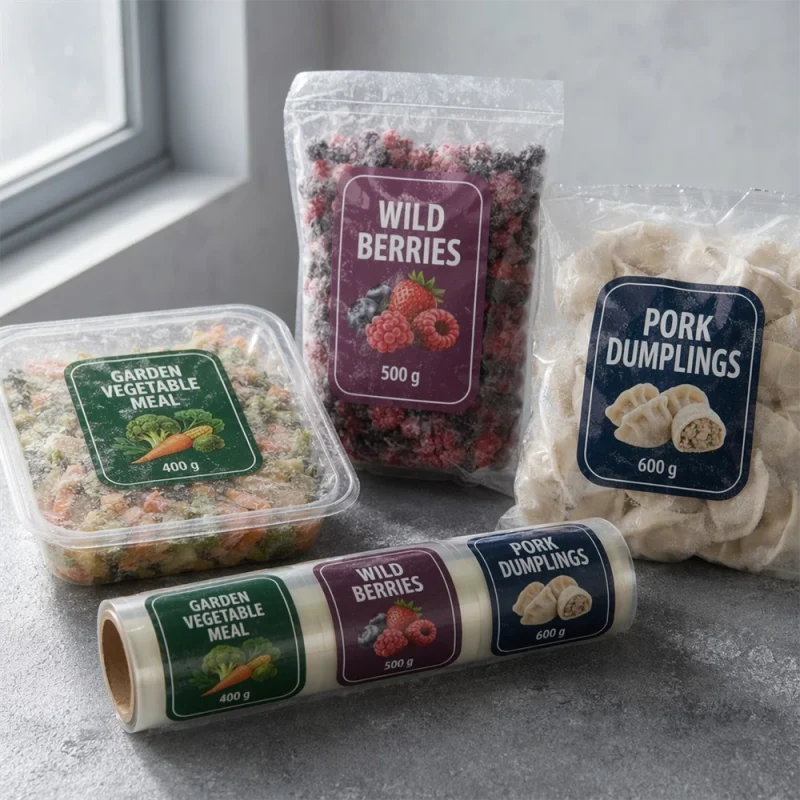
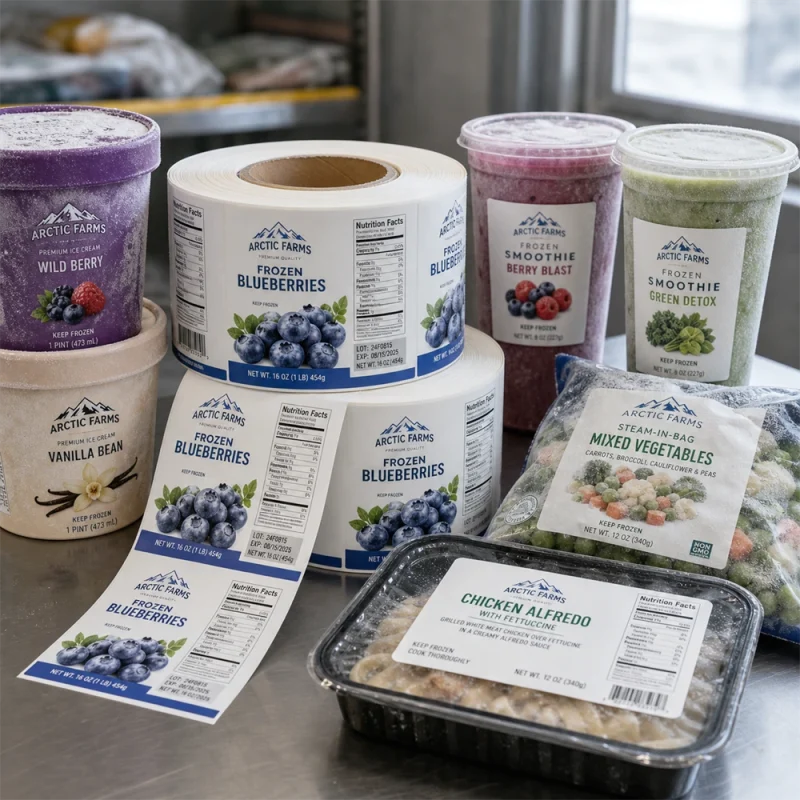
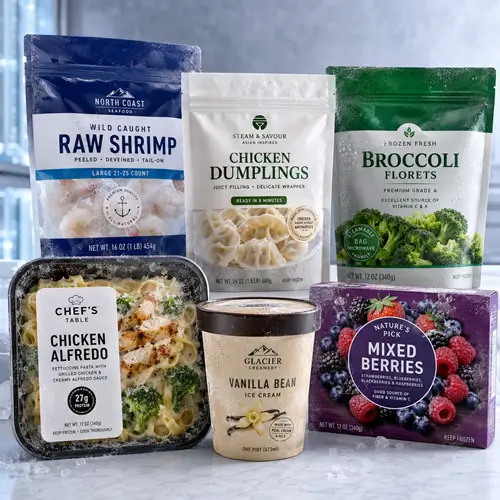
-18 to -25°CFrozen meals, vegetables, fruits, dumplings, pizzas, and ready-to-cook products. Labels must not peel, crack, or become illegible through freeze and display cycles.
Ice Cream & Frozen Desserts
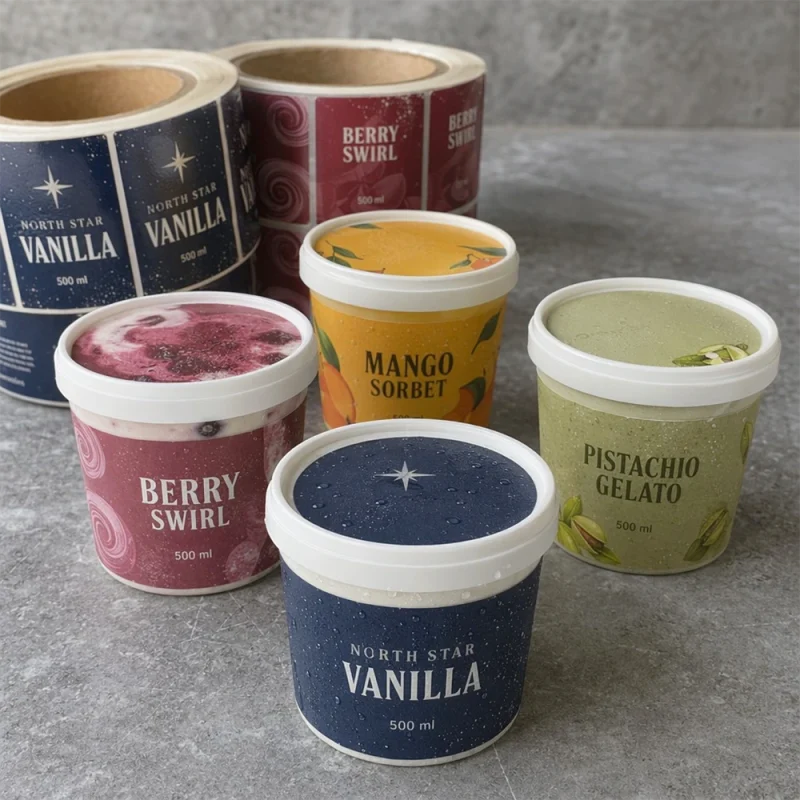
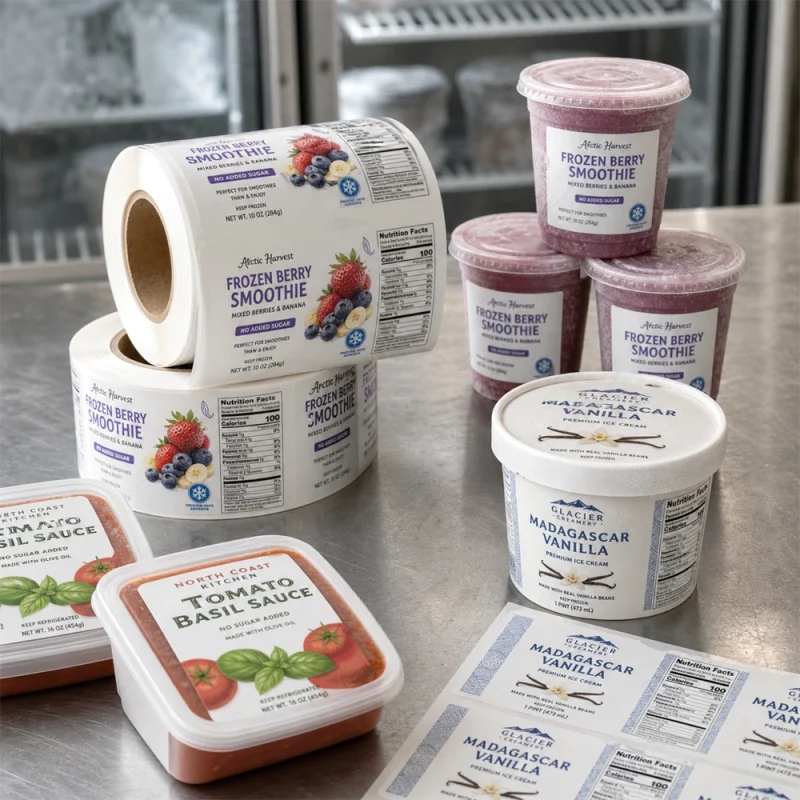
-25°CIce cream tubs, frozen yogurt, sorbet, and gelato containers face both extreme cold and moisture condensation when removed from freezer. Specialized adhesive keeps labels bonded.
Cold-Chain Logistics
-20°C transitTemperature-sensitive shipping labels for pharmaceuticals, biologics, vaccines, and frozen food distribution. Labels must survive the entire cold chain from warehouse to destination.
Medical & Lab Freezer Storage
-20 to -80°CSample vials, blood bags, reagent bottles, and lab specimens stored in medical freezers. Labels must remain scannable and legible for identification over long storage periods.
Frozen Meat & Seafood
-20°C storageVacuum-sealed meat, fish, and seafood packaging stored in commercial freezers. Labels applied before freezing must maintain bond through freeze-thaw cycles.
Refrigerated Meal Prep
0 to -18°CSubscription meal services, pre-portioned meal kits, and fresh meal delivery packs that may be frozen by the consumer. Labels need to survive both refrigeration and freezing.
Materials for Freezer-Safe Labels
Six face-stock & adhesive combinations engineered for sub-zero performance. All freezer-grade options use rubber hot-melt adhesive unless noted.
| Material | Adhesive Type | Why It Works |
|---|---|---|
|
White BOPP
|
Rubber hot-melt | Moisture-proof film with low-temp adhesive. Does not absorb condensation. Suitable for frozen food and ice cream packaging. |
|
White Vinyl
|
Rubber hot-melt | Thicker, more flexible film for rugged freezer and outdoor cold applications. Good for cold-chain logistics labels. |
|
Clear BOPP
|
Rubber hot-melt | Transparent film for no-label look on frozen product packaging. Moisture-proof and condensation-resistant. |
|
Thermal Transfer Paper
|
Rubber hot-melt | Cost-effective option for cold-chain logistics and warehouse labels. Paper face stock with freezer-grade adhesive for variable data printing. |
|
White PET
|
Rubber hot-melt | Premium film with superior durability and tear resistance for long-term freezer storage and medical applications. |
|
Coated Paper
|
All-temp acrylic | Budget option for moderate cold (0°C to -10°C). Not suitable for deep -20°C freezer environments. |
Where Freezer-Safe Labels Perform Best
Eight high-impact applications. Gold-bordered cards represent primary use cases where freezer-grade adhesive is non-negotiable.
Frozen Food
Frozen meals, vegetables, fruits, pizzas, dumplings. Labels survive -20°C freezer storage and display.
Ice Cream & Desserts
Ice cream tubs, frozen yogurt, gelato. Labels survive deep freeze and condensation on removal.
Meat & Seafood
Frozen meat packaging, vacuum-sealed fish, poultry. Labels survive commercial freezer storage.
Beverage (Chilled)
Cold-pressed juices, smoothies, dairy drinks stored in refrigeration or freezer. Condensation resistant.
Pharmaceutical
Vaccine labels, blood bag labels, reagent vials. Cold-chain compliance and low-temp adhesion.
Logistics & Warehousing
Cold-chain shipping labels, frozen warehouse bin labels, inventory tracking in cold storage.
Meal Prep & Delivery
Subscription meal kits, frozen meal delivery. Labels survive shipping and consumer freezing.
Retail Frozen
Supermarket frozen section labels with barcodes and pricing that remain scannable in freezer aisles.
Understanding Freezer Label Performance
The science behind why labels fail in cold — and how freezer-grade engineering solves each failure mode.
Adhesive Is the Critical Factor
The face stock material matters, but the adhesive is what makes or breaks a freezer label. Standard acrylic adhesives harden and lose tack below 0°C. Rubber-based hot-melt adhesives stay flexible and maintain bond strength at -20°C and below.
Application Temperature Matters
Best results come from applying labels at room temperature before the product enters the freezer. Some freezer adhesives can be applied at -10°C, but bond strength is reduced. Always test your specific application conditions.
Freeze-Thaw Cycle Stress
Products that go through multiple freeze-thaw cycles (removal and return to freezer) put extra stress on label adhesive. Rubber hot-melt adhesive handles this better than acrylic, but testing is essential.
Frost and Ice on Surface
Applying labels to frost-covered or icy surfaces is extremely challenging. If possible, apply before freezing. For pre-frozen surfaces, a high-tack freezer adhesive with longer dwell time before re-freezing is needed.
Not for Cryogenic Use
Standard freezer-safe labels are rated for -20°C to -29°C. Dry ice (-78°C) and liquid nitrogen (-196°C) require specialized cryogenic adhesives. Contact us for extreme low-temperature applications.
Barcode and QR Readability
In freezer environments, frost can obscure barcodes. For retail frozen products, use a smooth film face stock with high-contrast printing and test scan readability through frost or condensation.
Freezer-Safe Label Formats
Three production formats engineered for different volumes, application methods, and operational scales.
Freezer-Safe Roll Labels
For batch application on frozen food packaging lines. 500 to 100,000+ labels per run. Compatible with machine applicators used in cold-chain operations.
Roll Labels →Freezer-Safe Sheet Labels
For small-batch frozen food brands, meal prep services, and sample testing. Manual application for startups and artisan producers.
Sheet Labels →Freezer-Safe Stickers
For frozen food seals, date stickers, batch code labels, and inventory stickers used in freezer storage. Die-cut or kiss-cut formats.
Stickers →Buyer Mistakes with Freezer Labels
Six costly errors we see repeatedly — and how to avoid them before mass production.
Using Standard Permanent Adhesive
The most critical error. Standard acrylic permanent adhesive becomes rigid at freezing temperatures, losing bond strength. Labels flag, peel, or fall off entirely. Always specify freezer-grade rubber adhesive for -20°C applications.
Using Paper Face Stock for Freezer
Uncoated paper absorbs condensation moisture when products are removed from the freezer, causing the label to warp, smear, or disintegrate. Use BOPP or vinyl film face stock instead.
Not Testing Before Mass Production
Freezer label performance depends on the specific container material, application temperature, and freeze-thaw cycle. Always test on real products under real conditions before ordering large quantities.
Applying Labels to Frosty Surfaces
Frost and ice on the container surface prevent adhesive contact. If labels must be applied to pre-frozen products, use a specialized high-tack freezer adhesive and allow longer dwell time before returning to freezer.
Ignoring Freeze-Thaw Cycle Stress
Products that are repeatedly removed and returned to the freezer put cyclic stress on label adhesive. Confirm that your adhesive can handle freeze-thaw cycles, not just single-freeze storage.
Assuming Cold-Resistant = Cryogenic
Freezer-safe labels are rated for standard freezer temperatures (-20°C). Dry ice (-78°C) and liquid nitrogen (-196°C) require entirely different adhesive systems. Do not assume one freezer label works for all low-temperature applications.
Freezer-Safe Label FAQ
Five questions that cover temperature ratings, application conditions, and edge cases.
Freezer-safe labels with rubber hot-melt adhesive maintain their bond and flexibility at -20°C (-4°F) and can perform down to approximately -29°C (-20°F) depending on the specific adhesive formulation, face stock material, and surface type. For temperatures below -29°C, specialized cryogenic adhesives are required.
Some freezer-grade adhesives can be applied at temperatures as low as -10°C (14°F), but bond strength is reduced compared to room-temperature application. For best results, apply labels at room temperature before the product enters the freezer. If applying to pre-frozen surfaces, use a high-tack freezer adhesive and allow extended dwell time before returning the product to the freezer.
Waterproof labels resist water and moisture using film face stocks, but they may use standard permanent adhesive that becomes brittle at low temperatures. Freezer-safe labels combine a moisture-resistant or waterproof face stock with a specialized low-temperature rubber adhesive that stays flexible and maintains bond strength in sub-zero conditions. All freezer-safe labels should be moisture-resistant, but not all waterproof labels are freezer-safe.
Freezer-safe labels are designed for application to packaging surfaces such as bags, tubs, trays, and containers, not for direct contact with food. They should be used on the outer packaging of frozen food products in compliance with applicable food packaging regulations.
Standard freezer-safe labels are rated for -20°C to -29°C. Dry ice maintains a temperature of approximately -78°C (-109°F), which is far below the range of standard freezer adhesives. For dry ice or cryogenic applications, specialized cryogenic adhesives and face stocks are required. Please contact our team to discuss extreme low-temperature label solutions.
Get Labels That Survive the Freezer
Tell us your storage temperature, container type, and application conditions. We will recommend the right freezer-grade adhesive and film material.
No reviews yet.
Write a Review
You must be logged in to post a comment.