

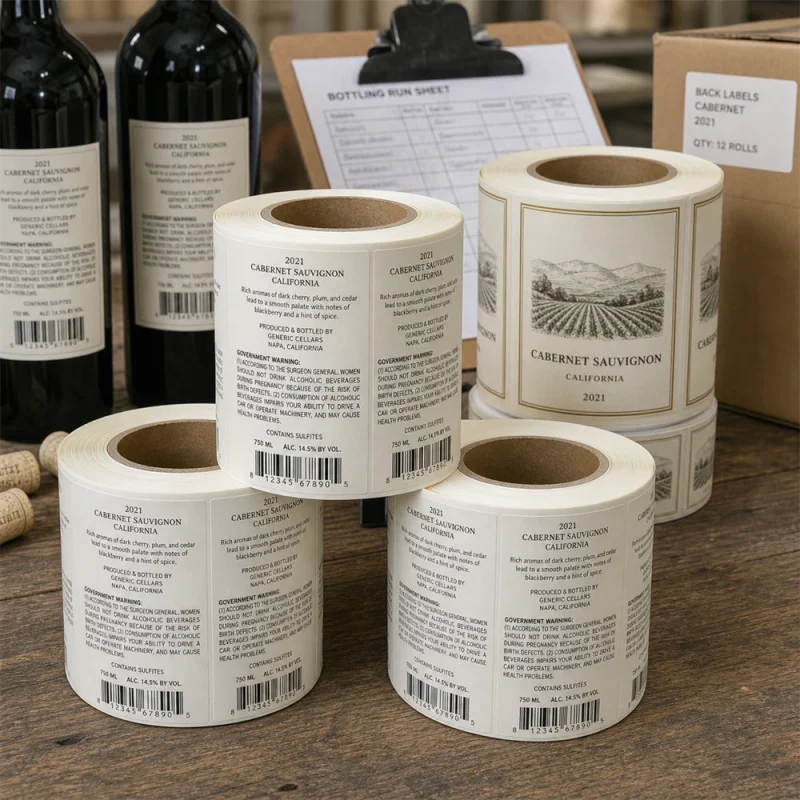
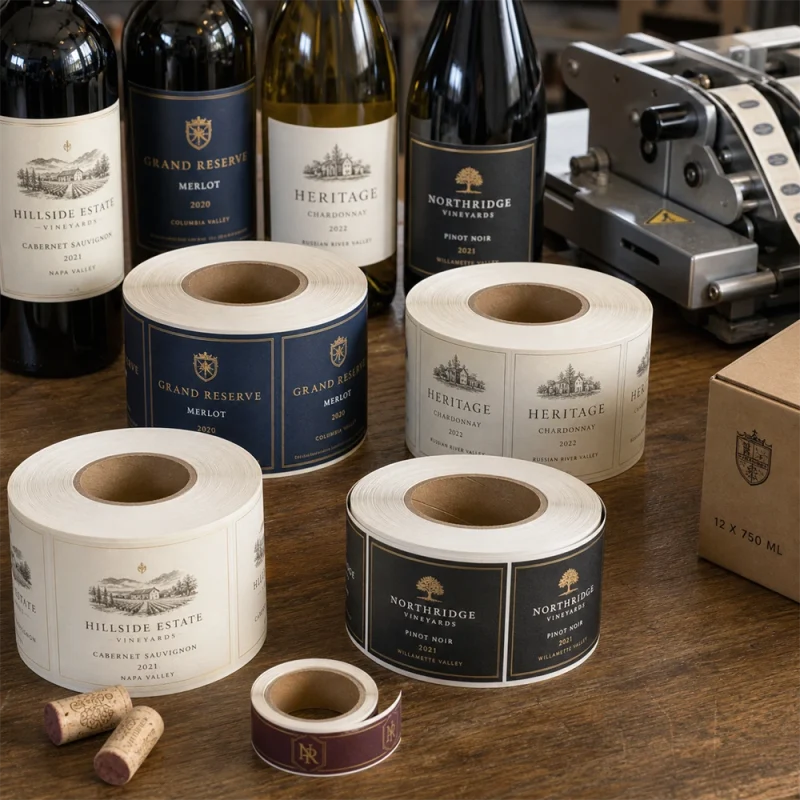
Custom Wine Labels for Estate, Reserve & Boutique Bottles
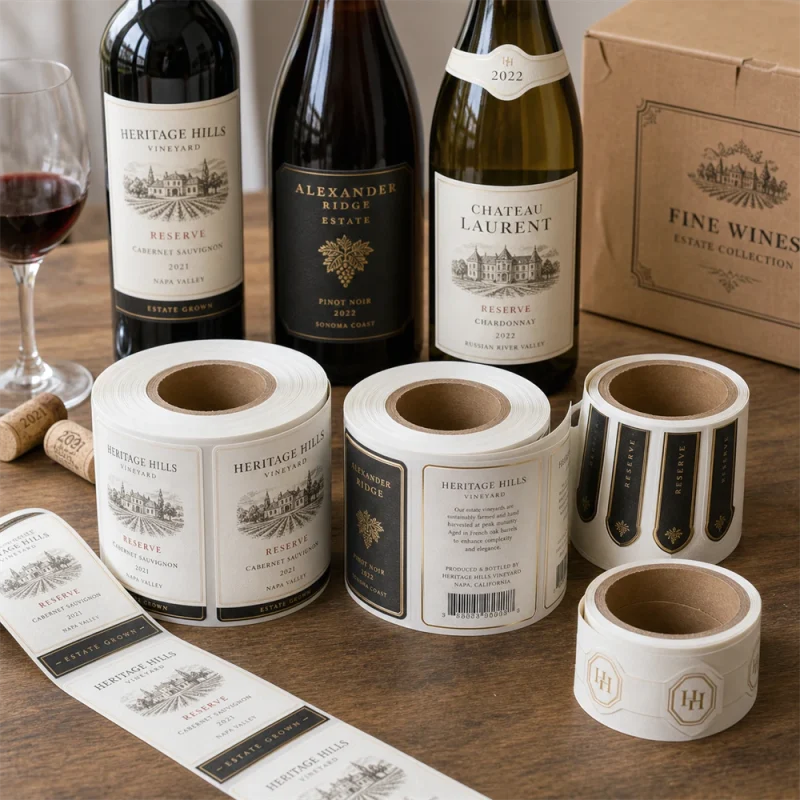
Premium wine labels engineered for Estate #8 & #9 paper, gold foil stamping, embossing, and wet-strength ice-bucket service. Coordinated front, back & neck label sets for Bordeaux, Burgundy, Champagne, and Riesling bottles.
Bottle Profile Matrix
Label zone · Bottle silhouetteWine labels communicate heritage, quality, and shelf appeal before the bottle is ever opened. LabelsAgent sources premium wine labels from experienced Chinese label factories, offering estate paper textures, foil stamping, embossing, and wet-strength materials that survive ice bucket immersion while maintaining the luxurious tactile feel that wine buyers expect.
Six Realities Every Wine Label Must Survive
From ice-bucket immersion to humid cellars, wine labels face some of the harshest service conditions in packaging. Here is what we engineer for.
Ice Bucket Immersion
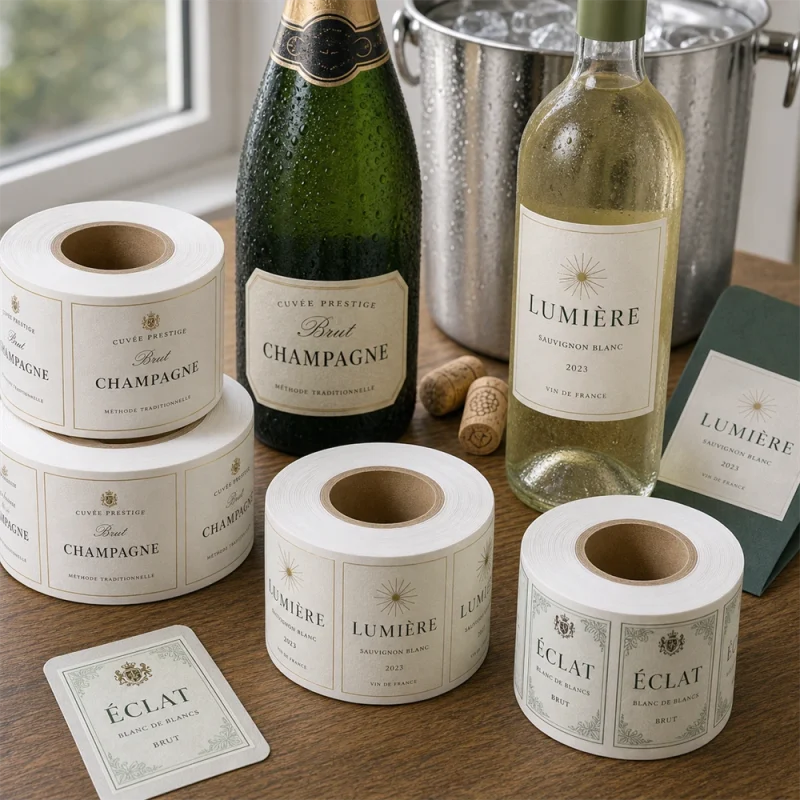
Wine and champagne bottles sit in ice for hours. Standard labels dissolve, fade, or slide off — losing brand presence at the moment of service.
Cellar Humidity
Bottles stored in humid cellars (60–80% RH) develop label mold, edge curl, and adhesive failure over months of aging.
Premium Tactile Feel
Wine buyers associate paper texture and weight with bottle quality. Thin or smooth paper undermines the brand promise before the cork is pulled.
Bottle Curvature
Burgundy and Champagne bottles have aggressive curves. Wrong materials or oversized labels wrinkle, flag, or lift at the edges.
Foil & Texture Coordination
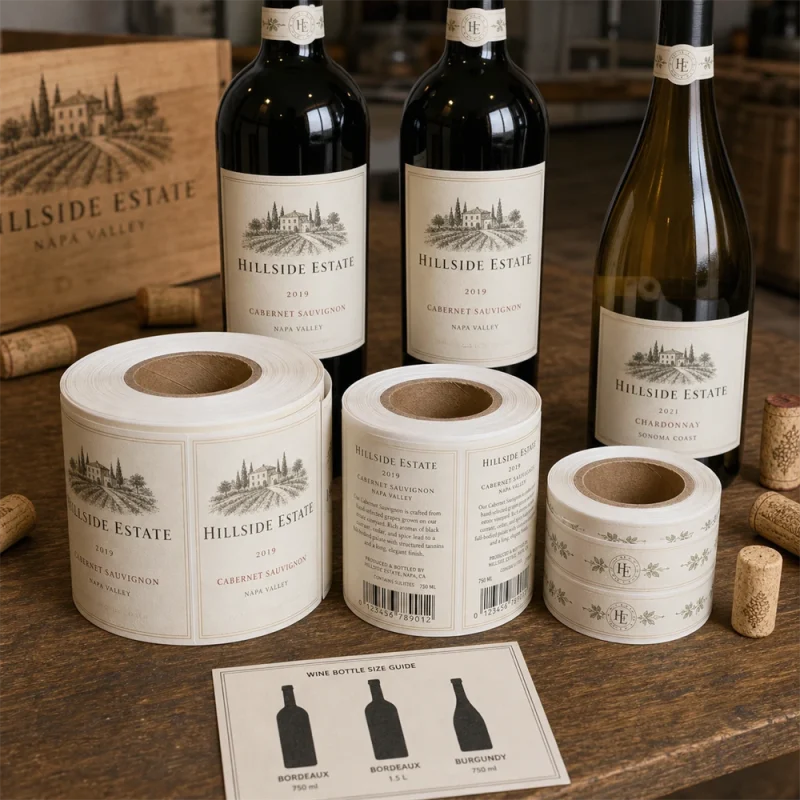
Premium wines need consistent foil, paper texture, and embossing across front, back, and neck labels — a coordinated set, not separate pieces.
Shelf Differentiation
Wine shelves are crowded. Labels must stand out while communicating heritage — a balance of texture, foil, and visual restraint.
Ice Bucket Survival Curve
How four label materials perform over 8 hours of ice bucket immersion. Beyond 4 hours, only wet-strength and film materials retain label integrity.
Label Integrity vs. Immersion Time
Six Wine Label Materials, Ranked by Tactile Impact
From the apex Estate #9 reserved for ultra-premium reserve bottlings to Clear BOPP for modern minimalist brands — choose by the story your bottle tells.
Material Selection Notes
- Estate #8 Paper
- The premium standard for fine wine. Heavy, uncoated textured paper with a luxurious feel. Pairs with gold foil and embossing. Best for: estate, reserve, and luxury brands.
- Estate #9 Paper
- Heavier and more textured than Estate #8. Maximum tactile impact for top-shelf wines, limited editions, and library bottlings. Reserve-tier pricing.
- Wet-Strength Paper
- Paper that resists water disintegration. Maintains appearance after ice bucket immersion. Required for champagne, sparkling, and iced white wine service.
- Textured Paper (Laid)
- Laid texture pattern evokes traditional Old World wine aesthetics. Works beautifully with foil stamping for heritage brands.
- Clear BOPP
- No-label look for contemporary wine packaging. Waterproof and condensation-resistant. Used for modern minimalist brands.
- Cotton Paper
- Soft, natural texture with organic character. Premium alternative for boutique wineries, natural wine, and handmade brands.
Six Finishes That Define Wine Shelf Presence
Premium wine labels layer foil, embossing, and texture. Each finish adds tactile and visual distinction — combine for maximum shelf impact.
Gold Foil Stamping
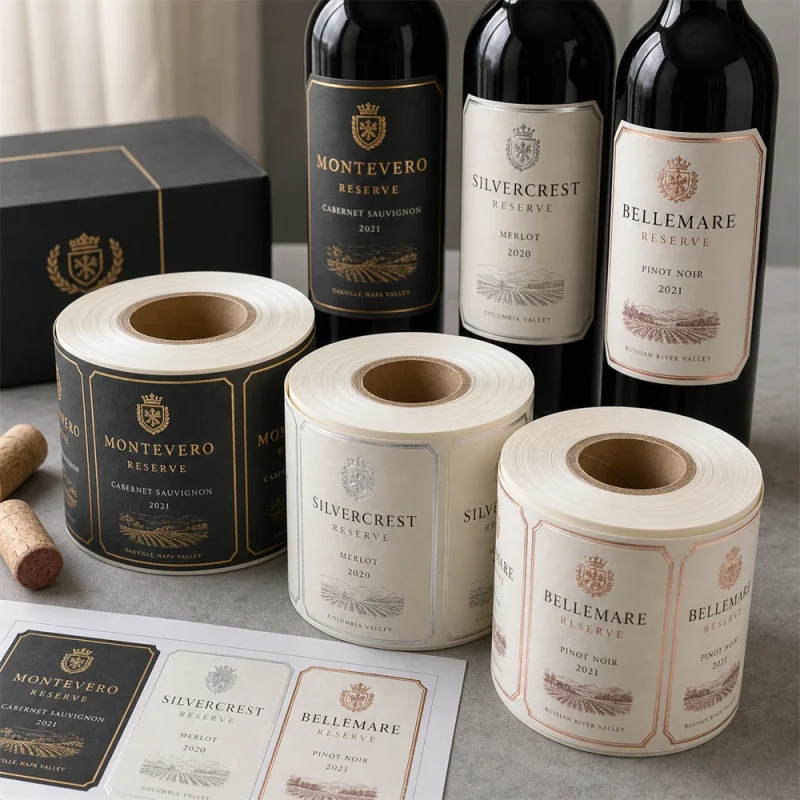
SignatureClassic gold foil for wine logos, borders, and decorative accents. The signature finish for premium and estate wines — instantly communicates quality.
Silver & Rose Gold Foil
Alternative metallic finishes for modern wine brands. Rose gold is increasingly popular for rosé, sparkling, and contemporary labels.
Embossing
TactileRaised relief on logos, crests, and brand elements. Adds tactile luxury that buyers can feel through the bottle — a key shelf differentiator.
Debossing
Sunken impression creating subtle depth. Often combined with foil for a refined multi-layer effect on reserve and library bottlings.
Matte Laminate
Soft, elegant sheen that enhances estate paper texture. Reduces glare for better shelf readability under retail lighting.
Spot UV Varnish
Selective gloss accents on matte backgrounds. Creates visual contrast that draws attention to brand elements and crests.
Curvature Conformity Heat Map
Not every material conforms to every bottle shape. This matrix shows which pairings work — and which risk wrinkling, flagging, or edge lift.
Material Performance by Bottle Type
Ratings based on conformability, adhesion, and field performance data.
| Material | Bordeaux | Burgundy | Champagne | Riesling | Custom Shape |
|---|---|---|---|---|---|
| Estate #9 Paper | PRM | WRN | WRN | OK | WRN |
| Estate #8 Paper | PRM | OK | WRN | OK | OK |
| Wet-Strength Paper | PRM | PRM | PRM | OK | OK |
| Textured (Laid) | OK | OK | WRN | OK | WRN |
| Cotton Paper | OK | WRN | NO | OK | WRN |
| Clear BOPP | PRM | PRM | PRM | PRM | PRM |
Three Wine Label Format Options
From full bottling-line production to boutique hand-application — choose the format that matches your production scale.
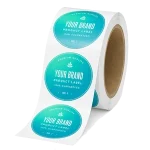
Roll Labels
For winery production lines and bottling facilities. Precision-wound rolls with correct unwind direction for automatic wine labeling machines.
- Min Qty500 labels
- UnwindSpec on request
- Best ForWinery bottling line
- ApplicationAutomatic machine
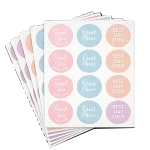
Sheet Labels
For small-batch boutique wines, private label projects, and limited vintages. Manual application for short runs and reserve bottlings.
- Min Qty100 sheets
- Sheet SizeLetter / A4
- Best ForBoutique & library
- ApplicationManual hand-apply
Neck & Collar Stickers
Coordinated neck wraps, collar labels, and bottle seals that complete the wine packaging presentation with matched materials.
- Min Qty500 stickers
- MatchFront/back label set
- Best ForPremium presentation
- ApplicationManual or semi-auto
Four Wine Label Design Tips
Practical guidance for artwork files, compliance, and material-finish harmony — the details that separate good wine labels from great ones.
Heritage Typography
Wine labels benefit from classic serif typography and elegant proportions. Consider the balance between brand name, vintage, varietal, appellation, and alcohol content on the front label.
Recommend: Cormorant, Trajan, or Garamond variantsFoil Artwork Setup
For foil stamping, provide the foil area as a separate layer or spot color in your vector file. Keep foil details bold enough for clean stamping.
Min line weight: 0.3pt · Spot color named "Foil"Back Label Compliance
Plan the back label for government warning, alcohol content, volume, sulfite declaration, and barcode. Different markets require different information layouts.
Markets: TTB (US) · EU · UK · APACMaterial & Finish Harmony
Choose paper texture and finish before finalizing design. Estate paper with foil looks different from smooth paper with gloss. Test before committing to a full run.
Order $9 sample pack to validate before productionCellar Conditions Tolerance
How each material performs under long-term cellar storage. The ideal zone is 55–65% RH at 12–16°C — but real cellars vary.
Material Tolerance Map · Humidity × Temperature
Each material occupies a comfort zone on the cellar conditions grid. Smaller zones mean tighter storage requirements; larger zones mean more forgiving long-term aging.
Material Cellar Ratings
- Wet-Strength PaperWide tolerance
- Clear BOPP FilmWide tolerance
- Estate #8 PaperModerate
- Estate #9 PaperModerate
- Textured (Laid)Tight tolerance
- Cotton PaperTight tolerance
Pro tip: For long-aging wines (5+ years), specify wet-strength paper or BOPP. Estate papers are beautiful but require controlled cellar conditions (50–70% RH, 12–18°C) to prevent edge curl and mold.
Related Wine & Beverage Label Pages
Wine Label Frequently Asked Questions
What is the best label material for wine bottles?
Estate paper (Estate #8 and Estate #9) is the premium standard for wine labels, offering a heavy, textured, tactile feel that communicates quality. For bottles that will be iced, wet-strength paper or waterproof film is essential to prevent label disintegration during ice bucket service.
Can wine labels survive ice bucket immersion?
Yes. We offer wet-strength paper and waterproof film materials with moisture-resistant adhesives that maintain adhesion and print quality during extended ice bucket immersion. This is critical for champagne, sparkling wine, and white wine service.
Can I add gold foil and embossing to wine labels?
Yes. Gold foil stamping, silver foil, rose gold foil, embossing, and debossing are all available for wine labels. These premium finishes are especially popular for estate wines, reserve bottlings, and special occasion vintages where shelf impact is critical.
Do you produce wine labels for different bottle types?
Yes. We produce labels for Bordeaux (tall shoulders), Burgundy (wide, sloped), Champagne (deep punt, wide body), Riesling (tall, narrow), and custom bottle shapes. Each bottle type has different label dimensions and curvature considerations that we account for in production.
Can I order front, back, and neck labels together?
Yes. We can produce coordinated front brand labels, back information labels, and neck wrap labels as a matching set with consistent paper stock, foil details, and design language. This ensures a unified presentation across the entire bottle.
Get Premium Wine Labels with Estate Paper, Foil & Texture
Send us your wine bottle specifications and artwork. We will recommend the right paper, foil, finish, and label set for your vintage.
No reviews yet.
Write a Review
You must be logged in to post a comment.