




Are Waterproof Labels Also Oil-Resistant? A Guide for Cosmetic and Food Packaging
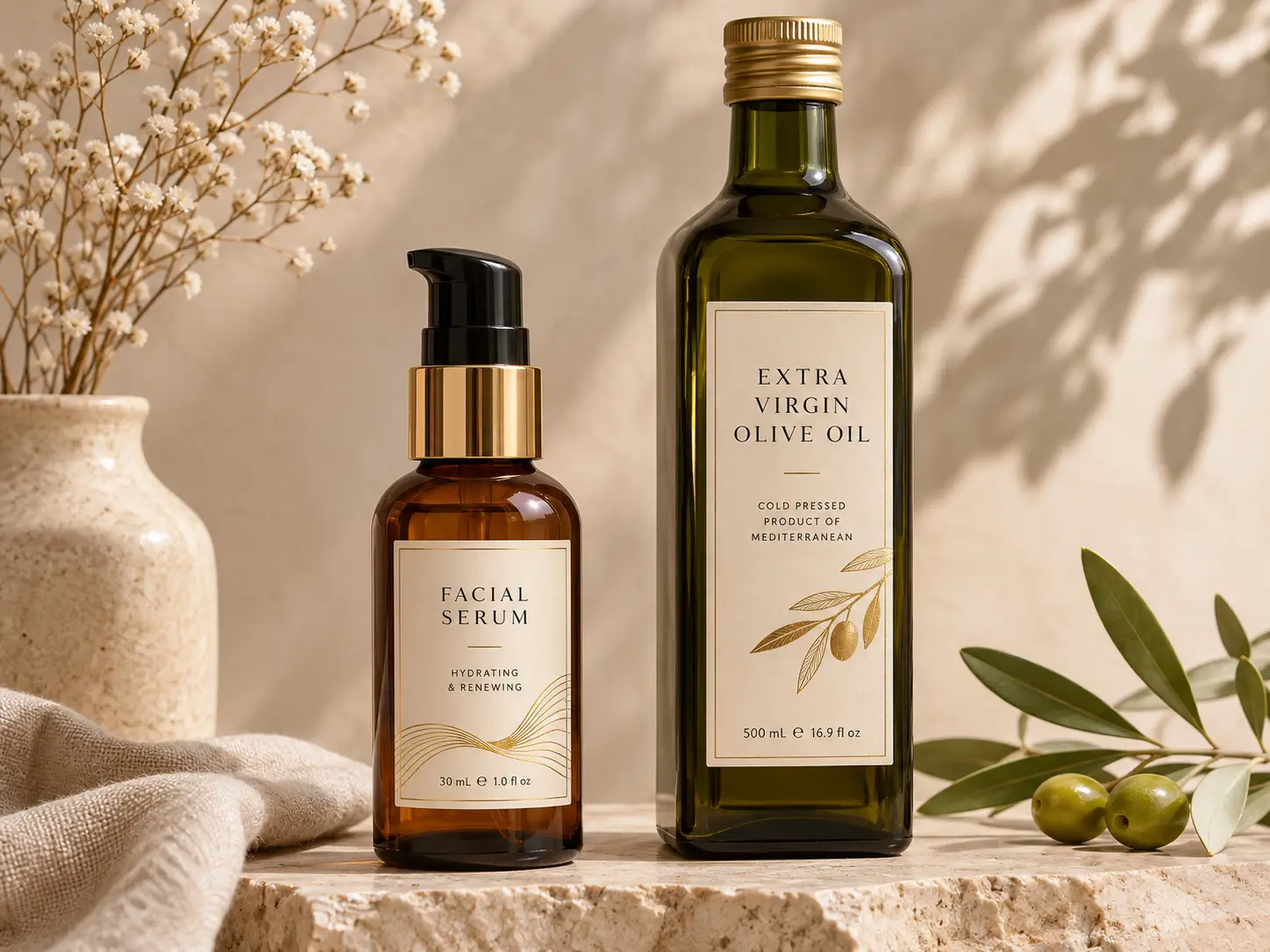
Some are, but you should not assume they are. A waterproof label may also resist certain oils, but water performance alone does not establish suitability for your formula, cooking oil, or wiping routine. The complete printed label needs to suit the actual container and exposure.
Here is a quick distinction: water left by wet fingers on a serum bottle is water contact. If an oil-based serum runs down that bottle—or edible oil drips onto a bottle label—you also have oil contact to assess. Describe both when both occur.
For cosmetic and food brands, start with three questions: What touches the outside label? Does it happen before or after labeling? What must remain intact? Avery’s durability guide discusses staining, print damage, and adhesive problems from oil separately from water exposure. [1]
Look at the Complete Label
The material name is only part of a label specification. Consider these parts separately:
- Facestock: the paper or film carrying the design. Identify the exact grade rather than relying on “BOPP,” “PET,” or “paper” alone.
- Printing: the ink that produces the text and colors. Its response to liquid and wiping matters even if the facestock looks unchanged. [1]
- Protective layer: a coating or laminate may protect the printed face. Establish what it covers; do not assume it seals the cut edges. [2]
- Adhesive: the bond to the container depends on the proposed adhesive, the surface, and conditions during application and later use.
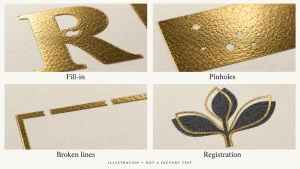
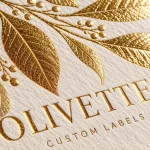
- Foil decoration: mark the metallic details on the artwork. Their position in a drip or rubbing area matters, as does whether the protective finish covers them.
Blue Label Packaging’s cosmetic material guide distinguishes absorption, print wear, and loss of adhesion. [2] These are separate outcomes to assess on a finished label.
Our label material guide introduces material families. Use it to explore options, then work from the proposed material grade, adhesive, printing, and finish—not a broad performance score.
Two Bottles, Two Quote-Request Examples
These are fictional purchasing examples, not customer case studies or test results. Adapt the details to your own package and add label dimensions, quantity per design, and artwork before sending.
Serum pump bottle: wet hands and formula residue
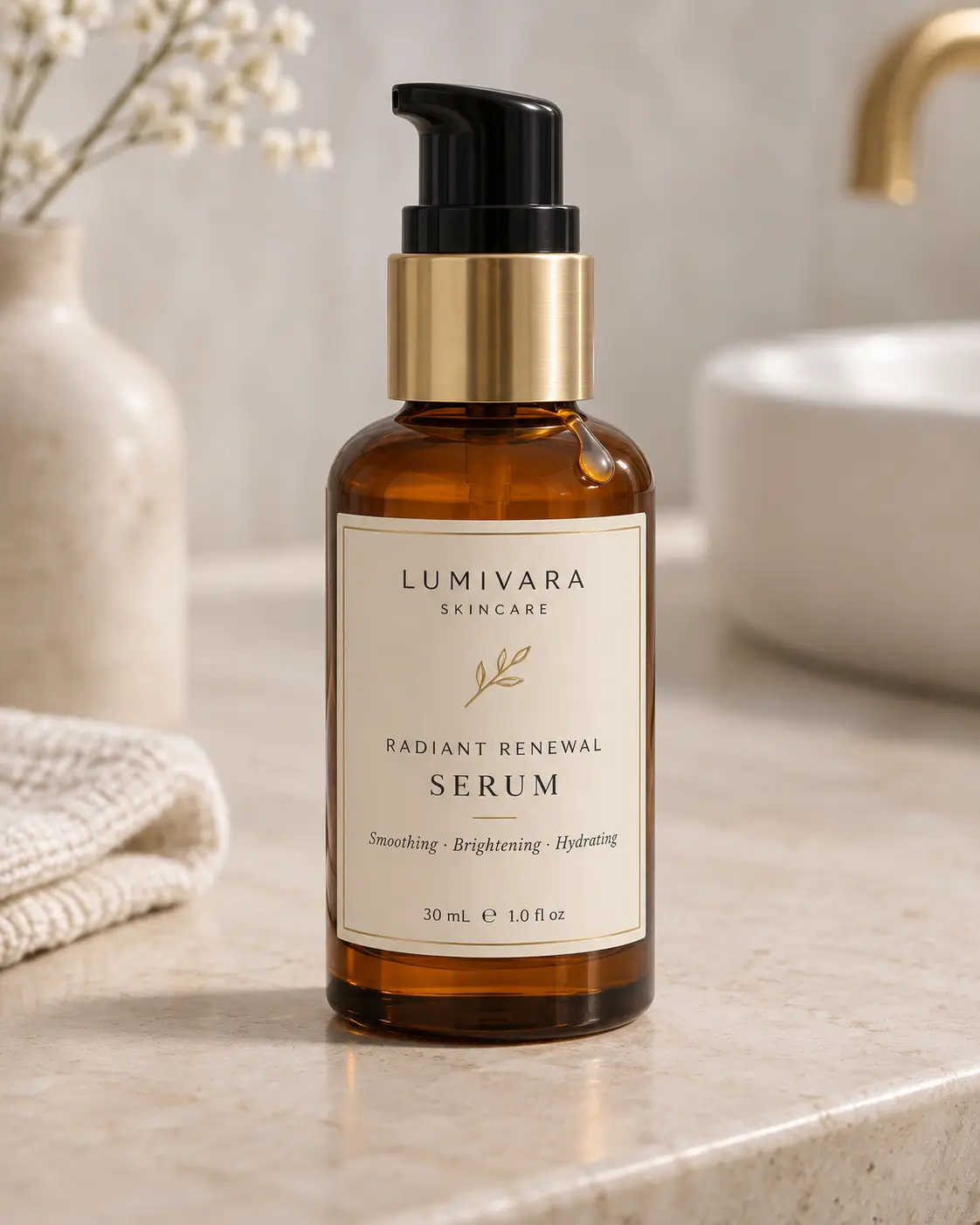
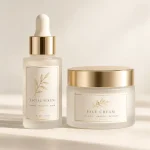
Observe what reaches the label during use. Wet fingers may leave water on the face; product from the pump may reach the shoulder or an edge. Identify the actual serum rather than assuming every serum is oily or has the same composition.
Describe the container surface, label position, filling and labeling sequence, and wiping routine. Mark any foil logo on the artwork. The foil and protective finish must be considered together. Foilco’s MF technical sheet provides grade-specific substrate and processing guidance and recommends testing a foil sample before purchase. [3] This does not establish that LabelsAgent uses MF foil or that a finished LabelsAgent label has verified oil resistance.
Example quote request
We need labels for a glass serum pump bottle, applied after filling to a clean, dry surface. Wet hands and our oil-based formula may contact the label face and upper edge. The artwork includes a foil logo. Please propose a label construction and explain available physical-evaluation options and any charges.
Keep these exposure details with your Cosmetic Labels request.
Edible oil bottle: clean application, later drips
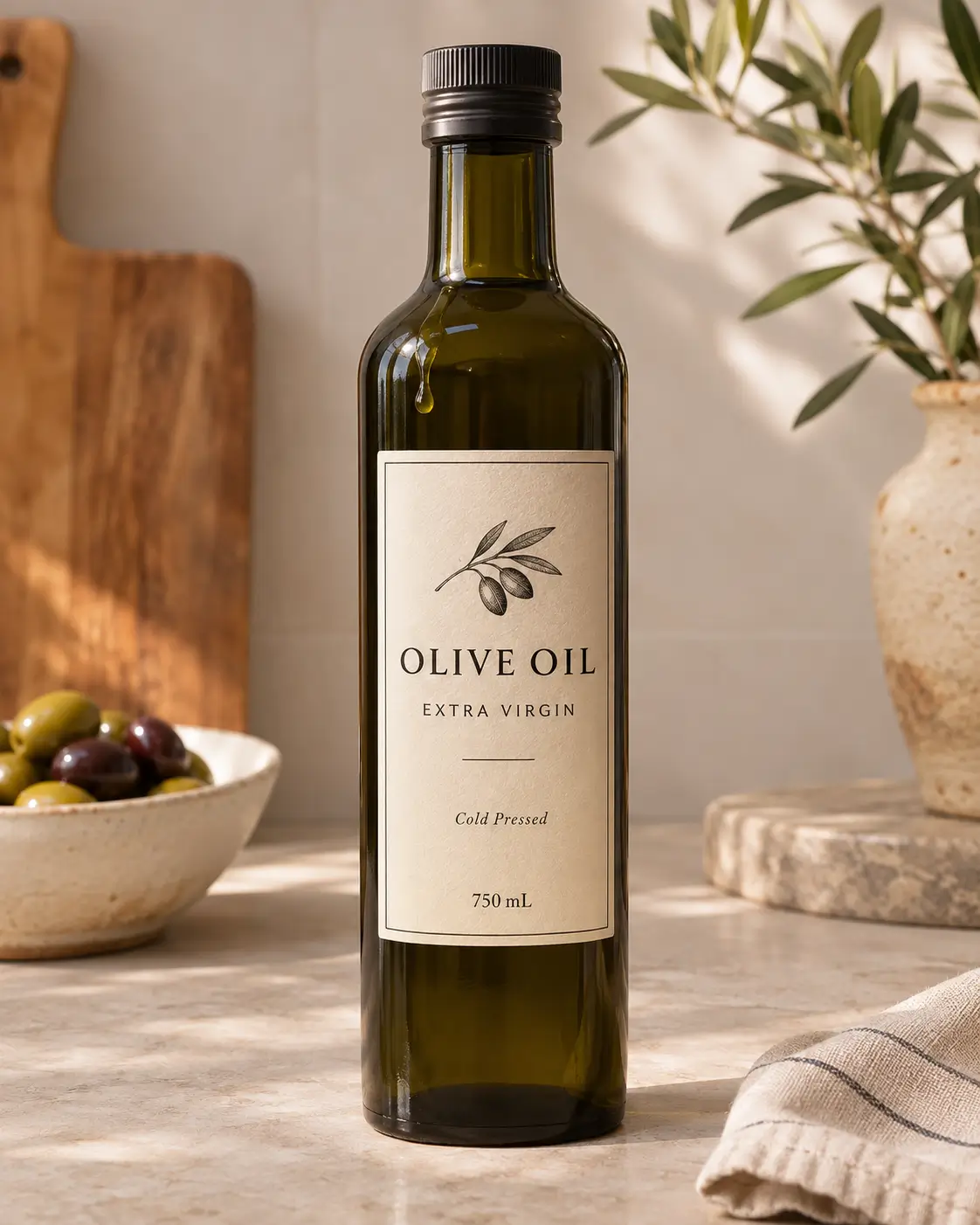
Oil sealed inside a bottle is different from oil touching the outside label. Observe the drip path after pouring, where customers grip the bottle, and whether they wipe it with a dry cloth, damp cloth, or cleaning product.
Check the filling line too. Later oil resistance does not establish that a label can be applied over oil residue. Describe any contamination at labeling, plus warm filling or cold storage if relevant. This guide concerns exterior package labels; direct food-contact suitability requires separate documentation.
Example quote request
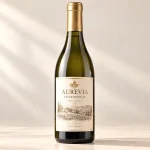
We need labels for glass olive oil bottles, labeled on a clean, dry surface after filling. During use, drips may reach the label face and edges, followed by wiping with a damp cloth. Please quote the proposed finished-label construction and identify what evidence or further evaluation would cover this use.
For Food Labels on oil bottles, include the pouring and wiping conditions with your specifications.
A Purchasing Decision Table
Use this short table to identify the main requirement. The evaluation section below covers the detailed records.
| You observe | Describe | Establish before ordering |
|---|---|---|
| Wet hands or condensation | Where and when water touches the label. | Water exposure covered by the complete-label specification. |
| Serum or edible oil on the label | Actual product, contact frequency, and wiping. | Evidence for that liquid and the proposed construction. |
| A wet or oily surface before labeling | Filling, cleaning, and application sequence. | Required surface preparation and adhesive suitability. |
| Smearing or lifted edges | What changed, where, and after which contact. | Whether printing, protection, or bonding needs reassessment. |
| Foil in a drip or rubbing area | Marked artwork and expected contact. | Foil placement, protective coverage, and finished-label evaluation. |
For metallic decoration, the foil label material guide covers substrate and process questions. Add the exposure details above to the visual brief.
A candle jar with fragrance residue or a wine or spirits bottle placed in ice introduces different oil, heat, or water conditions. Describe those separately; results from a serum bottle do not establish suitability for another use.
How to Evaluate the Complete Finished Label
Arrange a representative physical evaluation before relying on a performance claim. Establish what samples or proofs are available, what they cost, and who will perform and document the evaluation. A digital proof can help with wording and layout; it cannot demonstrate water, oil, or wiping performance.
1. Identify the label and container
Record the material grade, adhesive, artwork version, finished dimensions, printing, protective finish, and foil arrangement. Use the intended container, including its surface coating. Record any difference between the evaluated sample and the proposed production label.
2. Agree on realistic conditions and acceptance criteria
Document surface preparation, application conditions, the interval before exposure, liquids, temperature, contact duration, wiping, and storage. With appropriate technical guidance, choose conditions and acceptable outcomes that reflect the product’s use. This guide sets no universal temperature, duration, or pass threshold.
Water-only and oil-only evaluations can help distinguish effects. If both occur in use, include the relevant sequence in the plan. Avery’s water-exposure guide illustrates the importance of exposure and package surface. [4] Its procedures are not a universal approval method for other labels.
3. Record the results by failure type
Use before-and-after photographs and notes to distinguish staining, smearing, surface wear, foil changes, bubbles, edge lift, and detachment. Check whether important text remains readable. Where practical, retain a comparable unexposed label for reference.
4. Keep the result with its specification
Retain the conditions and observations with the exact specification assessed. Changes to the container, formula, adhesive, print protection, or foil arrangement may require reassessment. A brief observation does not establish performance over an untested shelf life.
What the LabelsAgent Standard Sample Pack Can Show
The standard sample pack costs US$9 and includes free sea shipping. It uses fixed artwork. After customer service verifies the sample-pack order, the US$9 fee is manually credited against a subsequent production order; it is not an automatic checkout discount.
The pack is a physical reference for the supplied examples. It is not an application test for your container or formula, and it does not establish the performance of a future custom label. For a proof using your own artwork, consult customer service about the available options and conditions.
Prepare Your Quote Request
Choose the example closest to your product and replace its details with your own. Send:
- Container material, surface details, and photos showing the label position.
- Finished label dimensions, quantity per design, and artwork or its current status.
- Conditions during application and later water, oil, and wiping exposure.
- Any existing evaluation records and questions still unresolved.
For external oil contact, explore our oil-resistant label options. For water exposure, compare our waterproof label options. These categories start the specification discussion; they do not establish that a particular label fits your package.
Request a label quote with your package details and adapted example. If a material or condition is undecided, say so. Distinguish a standard sample-pack request from a request for your own artwork or an application evaluation, so the scope and any charges can be clarified.
References / Source List
[1] Avery — Durable Label Materials
Organization: Avery
Document: Durable Label Materials: How to Choose Labels That Last
Link: Read the Avery durability guide
Supports in this article: The distinction between water exposure and oil-related staining, print damage, and adhesive problems; the importance of printing as part of label durability.
Scope: Supplier guidance for understanding failure mechanisms. Avery’s material recommendations and product claims are not LabelsAgent test results or guarantees.
[2] Blue Label Packaging — Cosmetic Label Materials
Organization: Blue Label Packaging
Document: Paper or Film Labels for Skincare and Cosmetics? How to Choose for Your Product
Link: Read the cosmetic label material guide
Supports in this article: Separate roles of the facestock, printing, protective layer, and adhesive; absorption, smearing, scuffing, edge exposure, and loss of adhesion as distinct concerns.
Scope: A converter’s explanation of cosmetic-label failure paths. Its preferred constructions, service terms, and customer statistics are not adopted as LabelsAgent facts.
[3] Foilco — MF Product Data Sheet
Organization: Foilco Limited
Document: MF Product Data Sheet, V.1.0.3, issued July 11, 2024
Link: Open the Foilco MF data sheet (PDF)
Supports in this article: Grade-specific substrate and processing guidance, the stated limits of suitability guidance, and the recommendation to test a foil sample before purchase.
Scope: This sheet concerns Foilco’s MF grade only. It does not establish that LabelsAgent uses MF, that any LabelsAgent construction has been tested, or that a finished label is oil-resistant. Its stamping temperatures are not label service temperatures or application-test criteria.
[4] Avery — Water Exposure and Label Selection
Organization: Avery
Document: Waterproof vs. Water-Resistant Labels: Which One Do You Need?
Link: Read the Avery water-exposure guide
Supports in this article: Matching water exposure to the intended use and considering the package surface when assessing adhesion.
Scope: Avery describes its own products and assessments. This article does not adopt its test durations, standards, or pass criteria as a universal method or as LabelsAgent validation.