

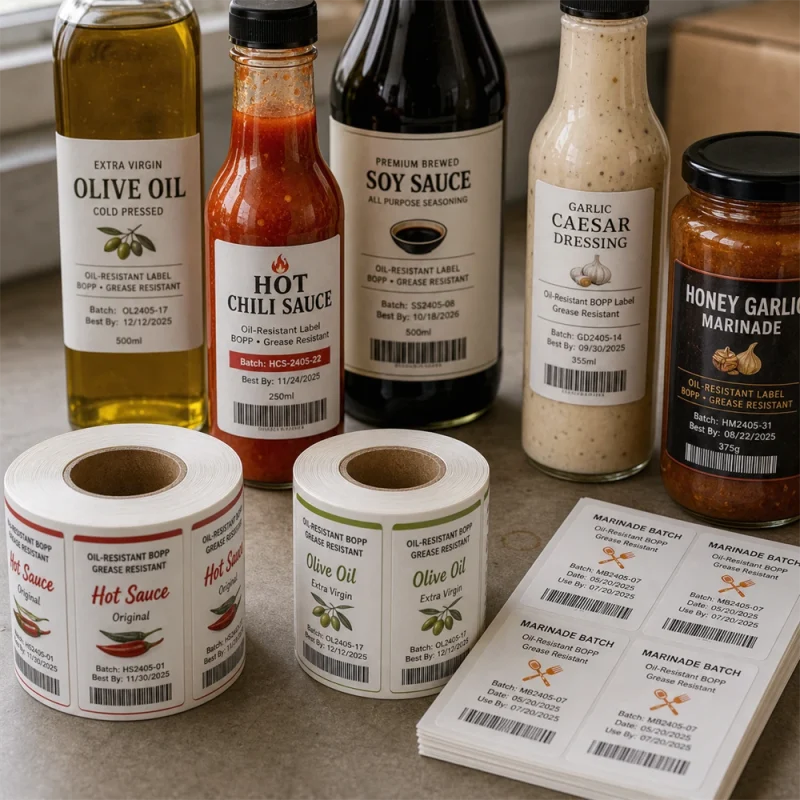
Custom Oil-Resistant Labels for Sauce, Skincare & Food
Labels that resist oil migration, ink bleed, and adhesive breakdown from direct contact with cooking oils, sauces, skincare serums, essential oils, and cosmetic formulas. Built with non-porous BOPP and PET films plus protective barrier coatings for food, beauty, and daily chemical packaging.
Penetration severity rises with terpene content and solvent strength. Every barrier stack must be matched to the oil type the product actually contains.
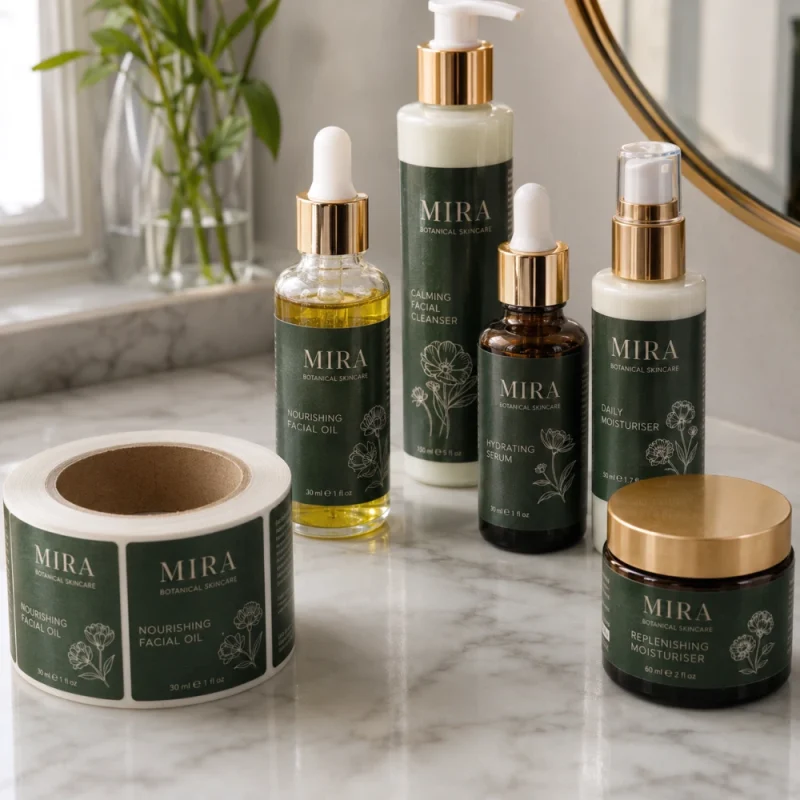
Oil-resistant labels are printed on non-porous film face stocks such as BOPP and PET, with a barrier coating and a compatible adhesive that resists oil penetration. Oil and grease from food products, skincare formulas, essential oils, and cosmetics can migrate through paper labels, causing ink to bleed, the label to become translucent, and the adhesive to break down and detach. Oil-resistant film labels prevent this migration, keeping the label legible and bonded throughout the product shelf life. LabelsAgent offers oil-resistant labels for sauce bottles, skincare containers, essential oil vials, food jars, cosmetic packaging, and daily chemical products.
When You Need Oil-Resistant Labels
Eight common product categories where oil content, residue, or contact makes paper labels fail and film labels essential.
Sauce & Condiment Bottles
Hot sauce, olive oil, soy sauce, dressing, marinade, and cooking oil bottles. Oil residue on the bottle exterior can stain and degrade paper labels within days.
Skincare & Serum Bottles
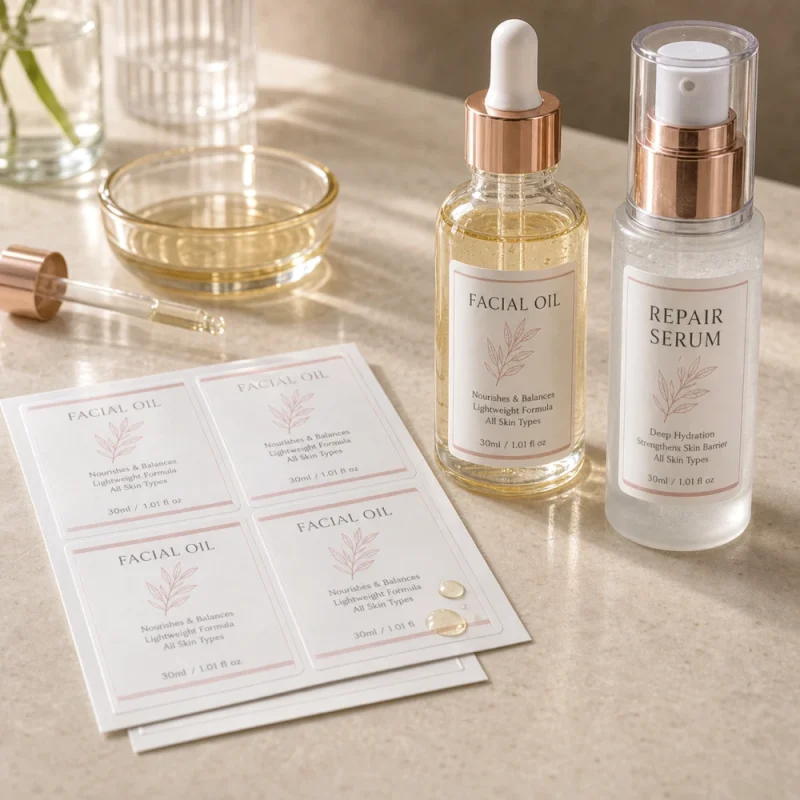
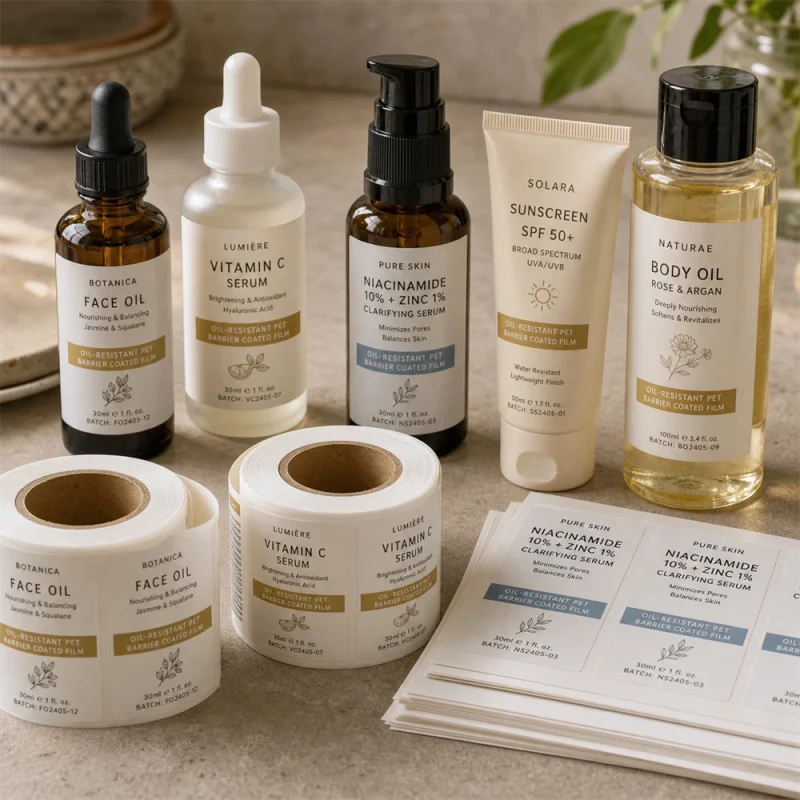
Face oils, serums, body oils, and oil-based creams leave residue on the bottle surface. Labels must resist oil contact from repeated handling and spills.
Essential Oil Bottles
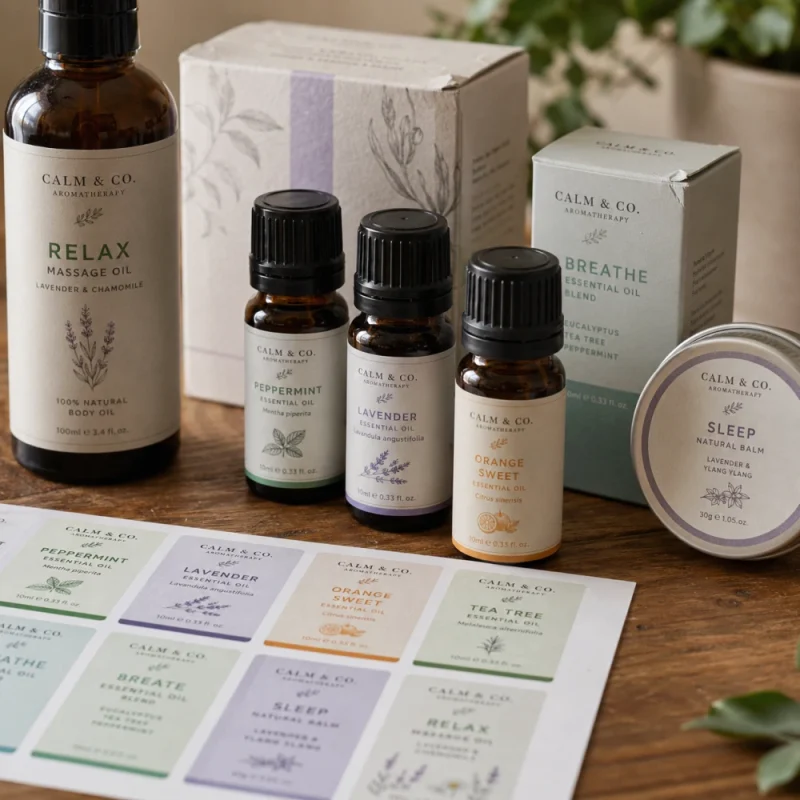
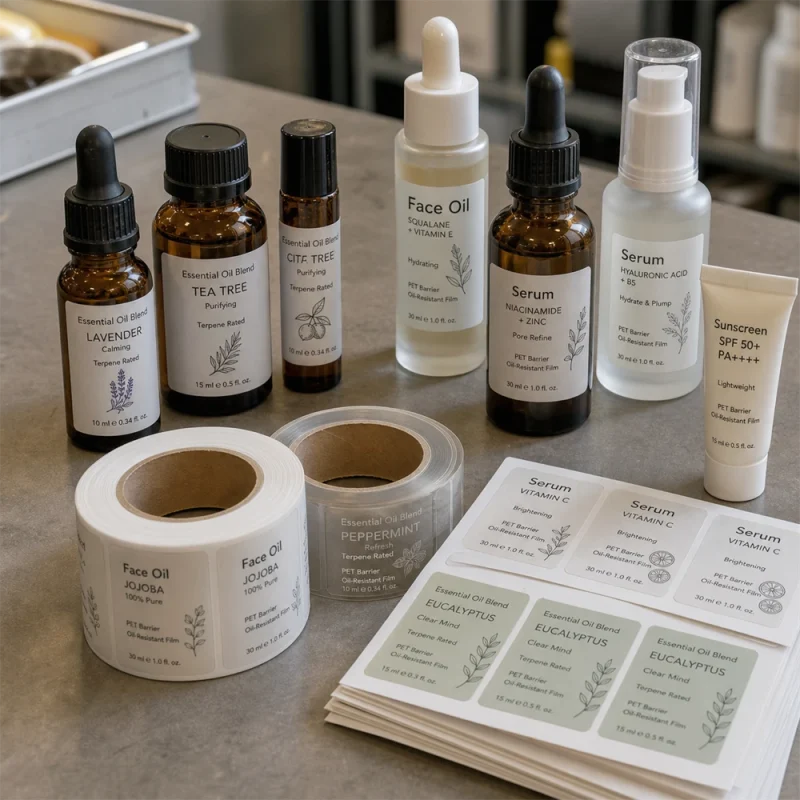
Essential oils are highly penetrating and can break down standard adhesives and paper face stocks. Specialized PET films with oil-barrier adhesive are required.
Food Jars with Oil Content
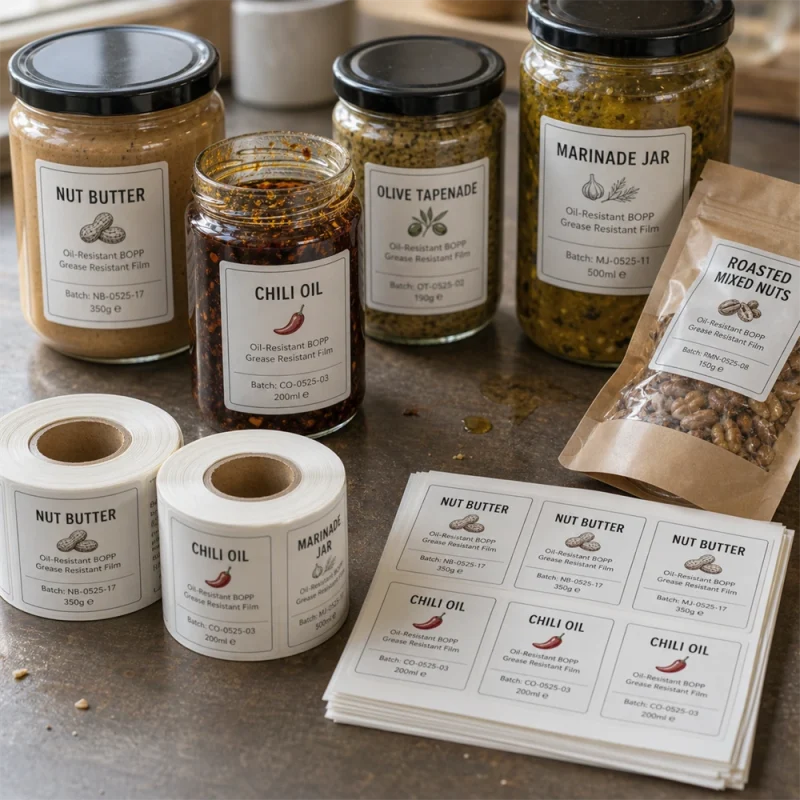
Nut butter, olive tapenade, chili oil, cooking paste, and marinade jars. Oil migrates outward through the container and into the label if it is not oil-resistant.
Cosmetic Product Packaging
Foundation, sunscreen, hand cream, body lotion, and makeup removers contain oils that can stain paper labels and degrade standard adhesives over shelf life.
Daily Chemical Products
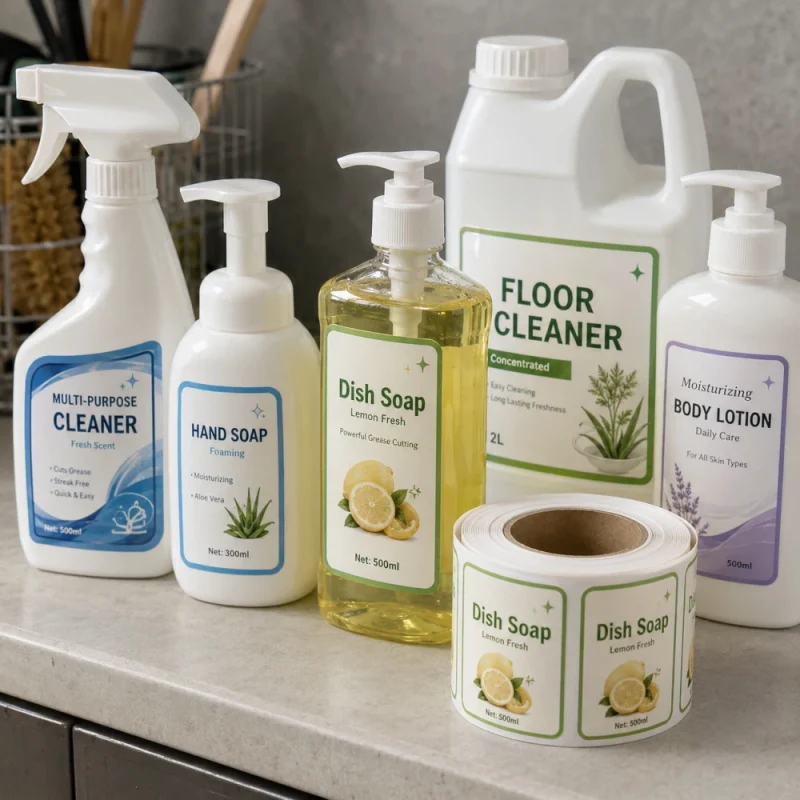
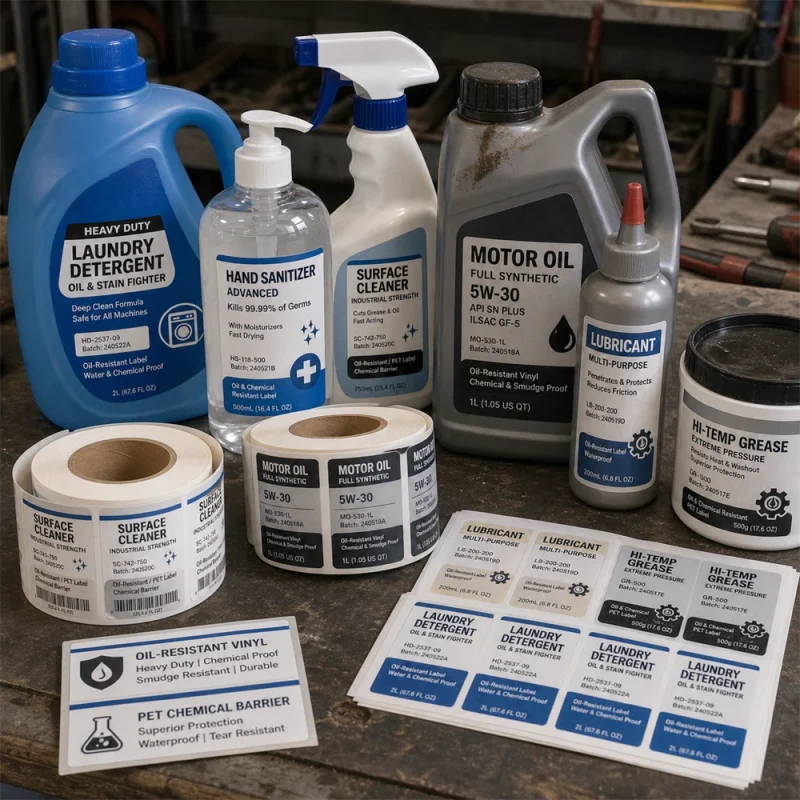
Detergents, fabric softeners, and cleaning products that contain surfactant or oil-based formulas need labels that resist chemical migration and remain legible.
Snack & Fried Food Packaging
Chips, nuts, fried snacks, and grease-containing foods can deposit oil on the packaging surface. Labels on the outer packaging need grease resistance.
Industrial & Automotive
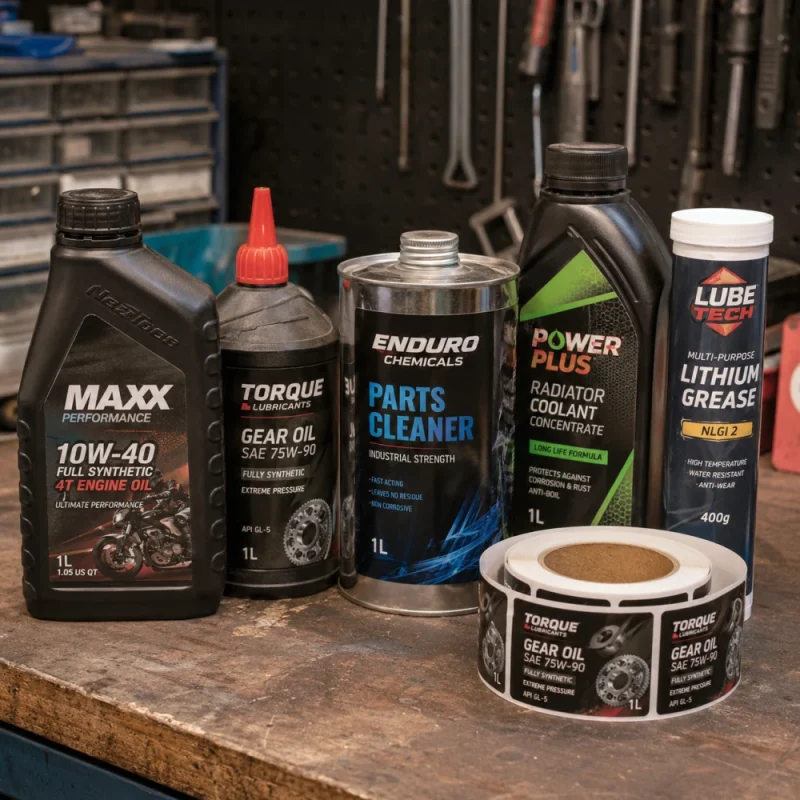
Motor oil, lubricant, grease, and automotive chemical containers require heavy-duty oil-resistant labels that withstand direct oil contact and rough handling.
Materials for Oil-Resistant Labels
Six film face stocks rated for oil exposure, ranging from standard BOPP to barrier-coated premium PET.
| Material | Swatch | Oil Resistance | Why It Works |
|---|---|---|---|
| White BOPP | Non-porous plastic film that blocks oil migration. The go-to material for food, sauce, and cosmetic labels. Compatible with oil-resistant top coats. | ||
| Clear BOPP | Transparent oil-resistant film for a no-label look on oil-containing products. Pair with white ink for light-color text visibility. | ||
| White PET | Stronger film with superior oil and chemical resistance. Best for essential oils, industrial products, and long-shelf-life items. | ||
| Clear PET | Premium transparent film with maximum oil and solvent resistance. Ideal for high-end essential oil and serum packaging. | ||
| BOPP + Oil-Resistant Top Coat | BOPP film with an additional oil-barrier coating for products with highly penetrating oils. Extra protection for essential oils and concentrated formulas. | ||
| White Vinyl | Thicker, flexible film for industrial oil containers and automotive products. Combines oil resistance with tear strength. |
Where Oil-Resistant Labels Perform Best
Eight industries where oil-resistant labels are the standard specification, not an upgrade.
Food
Sauce bottles, oil bottles, marinade jars, nut butter, snack packaging. Oil and grease resistant.
Beauty & Cosmetics
Serums, face oils, body oils, foundations, sunscreens, hand creams. Oil contact resistant.
Essential Oils
Essential oil vials, roll-on bottles, blend bottles. PET film with oil-barrier adhesive for terpene resistance.
Daily Chemical
Detergents, fabric softeners, surface cleaners, hand sanitizers. Surfactant and oil resistance.
Beverage
Cold-pressed juices, oil-infused drinks, tinctures. Oil and moisture dual resistance.
Industrial
Motor oil, lubricants, grease, automotive chemicals. Heavy-duty oil and solvent resistance.
Candle & Home
Essential oil diffusers, scented oil warmers, room sprays with oil content. Resists oil migration.
Retail
Cooking oil bottles, gourmet sauce jars, specialty food products with oil content or residue.
Understanding Oil-Resistant Label Performance
The six engineering principles that determine whether an oil-resistant label survives contact with oil over the full product shelf life.
Film Is Essential
Paper labels absorb oil regardless of coating. Even coated paper eventually allows oil migration through edges and micro-pores. For any product with oil content or oil contact, a film face stock (BOPP, PET, or vinyl) is the baseline requirement.
Oil Migration Through Containers
Oil can migrate outward through plastic containers (especially HDPE and soft PET) over time, reaching the label adhesive from behind. This requires an adhesive that resists oil breakdown, not just an oil-resistant face stock.
Essential Oils Are Aggressive
Essential oils contain terpenes (limonene, pinene) that are powerful solvents. They can break down standard adhesives and even some film coatings. For essential oil products, use PET film with a specialized acrylic adhesive rated for terpene resistance.
Lamination Adds Protection
A gloss or matte laminate over printed ink provides a physical barrier against oil contact from the surface side. This is recommended for sauce bottles and skincare products where oil frequently contacts the label face.
Test with Real Product
Oil resistance varies significantly by oil type (vegetable, mineral, essential, silicone), contact duration, and temperature. Always test labels with your actual product under real-world conditions before mass production.
Shelf Life Considerations
Labels may perform well initially but degrade over months of oil contact. For products with long shelf life (12+ months), specify extended oil-resistance testing and use premium PET film with barrier adhesive.
Oil-Resistant Label Formats
Three production formats covering everything from hand-applied sample kits to 100,000-unit filling-line runs.
Oil-Resistant Roll Labels
For batch application on sauce, oil, and cosmetic bottle filling lines. 500 to 100,000+ labels per run with permanent acrylic adhesive.
Roll Labels →Oil-Resistant Sheet Labels
For small-batch skincare brands, artisan sauce makers, and essential oil sample kits. Manual application for short runs.
Sheet Labels →Oil-Resistant Stickers
For promotional seals on oil-based product packaging, batch code stickers, and sample vial labels. Die-cut on BOPP or PET.
Stickers →Buyer Mistakes with Oil-Resistant Labels
Six expensive mistakes that cause oil-resistant label projects to fail — and how to avoid each one before going to press.
Using Paper Labels on Oil Products
The most common and costly mistake. Paper absorbs oil, causing darkening, ink bleed, adhesive breakdown, and eventual label failure. Even coated paper only delays the inevitable. Always use film for oil-containing products.
Not Considering Oil Migration Through Container
Oil can migrate through the container wall itself, attacking the adhesive from behind. The label face may look fine while the adhesive fails. For oil-heavy products in plastic containers, specify a barrier adhesive.
Ignoring Essential Oil Aggressiveness
Essential oils are among the most challenging substances for labels. Terpenes dissolve many adhesives and coatings. Standard BOPP may not be sufficient for pure essential oils. Always test and specify PET with terpene-resistant adhesive.
Assuming Waterproof = Oil-Resistant
Water resistance and oil resistance are related but not identical. A label can resist water but still allow oil penetration over time. Confirm that the material and coating are specifically rated for oil resistance, not just moisture.
Skip Testing on Real Product Surface
Oil resistance varies dramatically by oil type, temperature, and contact duration. A label that works for vegetable oil may fail with citrus essential oil. Always test with your actual product formula.
Overlooking Adhesive Selection
Buyers focus on the face stock but forget the adhesive. Even with an oil-resistant film, a standard adhesive can be broken down by oil migration. The adhesive must be matched to the oil exposure conditions.
Oil-Resistant Label FAQ
Five questions that cover the essentials of oil-resistant label specification.
Oil-resistant labels use a non-porous film face stock such as BOPP or PET with a top coating that prevents oil from penetrating the label surface. The key is that the film material does not absorb oil the way paper does, and the coating provides an additional barrier that protects both the printed ink and the adhesive layer from oil breakdown.
Yes. BOPP and PET film labels with oil-resistant coating withstand direct contact with cooking oils, sauces, marinades, and food residue. The film prevents oil migration into the adhesive layer, and the coating protects the printed surface from staining and ink bleed. This is the standard material choice for sauce bottles, oil bottles, and condiment packaging.
In most cases yes. BOPP and PET films are inherently both oil-resistant and water-resistant because they are non-porous plastic films. However, the adhesive type may differ depending on whether the primary challenge is water exposure (needing waterproof adhesive) or oil contact (needing oil-barrier adhesive). For products that face both, we recommend a film with a versatile adhesive rated for dual resistance.
Paper labels absorb oil over time, causing several visible and structural failures. The label may darken, become translucent at oil contact points, smear printed ink, and eventually the oil breaks down the adhesive layer causing the label to peel or slide off the container. This process can happen within days for heavily oiled products or over months for lightly oiled ones. For any product with oil content, film labels are the correct choice.
Yes, but essential oils are particularly aggressive due to their terpene content (limonene, pinene, etc.) which acts as a solvent. We recommend PET film rather than BOPP for pure essential oils, paired with a specialized acrylic adhesive rated for terpene resistance. Standard adhesives may soften or dissolve over weeks of essential oil exposure. Always test with the specific oil formula before committing to mass production.
Get Labels That Resist Oil Migration
Tell us about your product formula, container type, and oil exposure. We will recommend the right film, coating, and adhesive for oil-resistant performance.
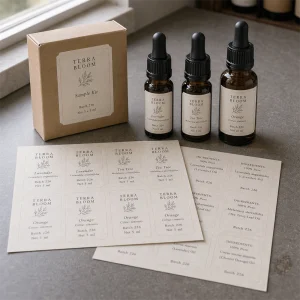
5 oil-resistant film materials including White BOPP, Clear BOPP, White PET, and barrier-coated BOPP. Pre-applied to test containers.
No reviews yet.
Write a Review
You must be logged in to post a comment.