

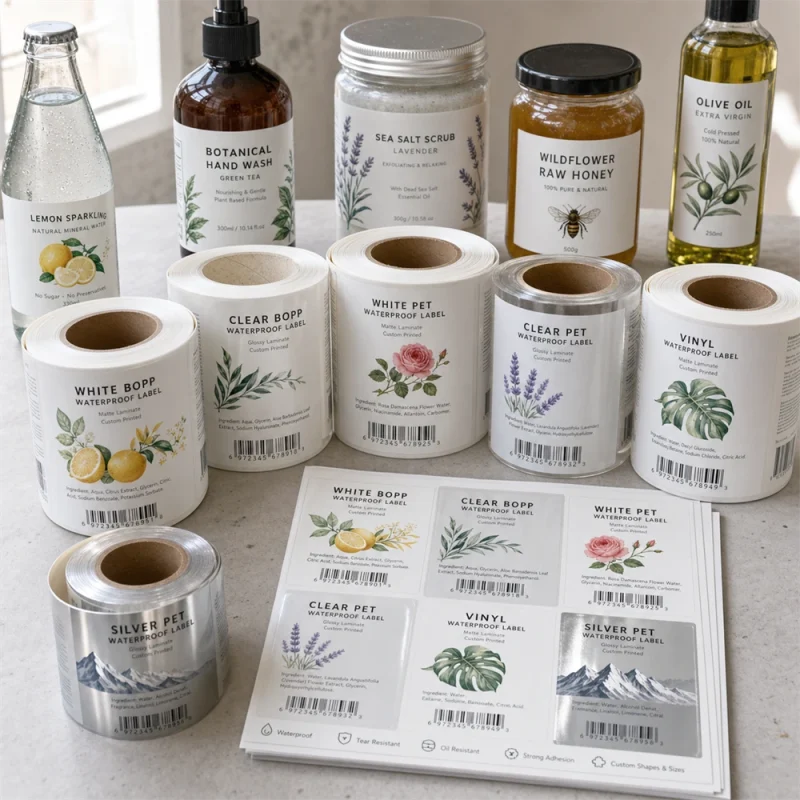
Waterproof Labels for Wet, Moist & Refrigerated Products
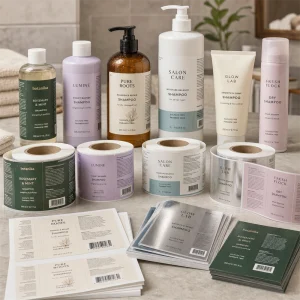
Built on film face stocks — BOPP, PET, and vinyl — with moisture-resistant acrylic adhesive and optional laminate. Your label stays readable, intact, and professional through condensation, ice-bucket submersion, repeated handling, refrigeration, and outdoor rain.
Moisture Survival Matrix
Six Conditions That Demand a True Waterproof Label
If your product lives in any of these environments, a paper label will fail within hours. Here is where film face stocks earn their premium.
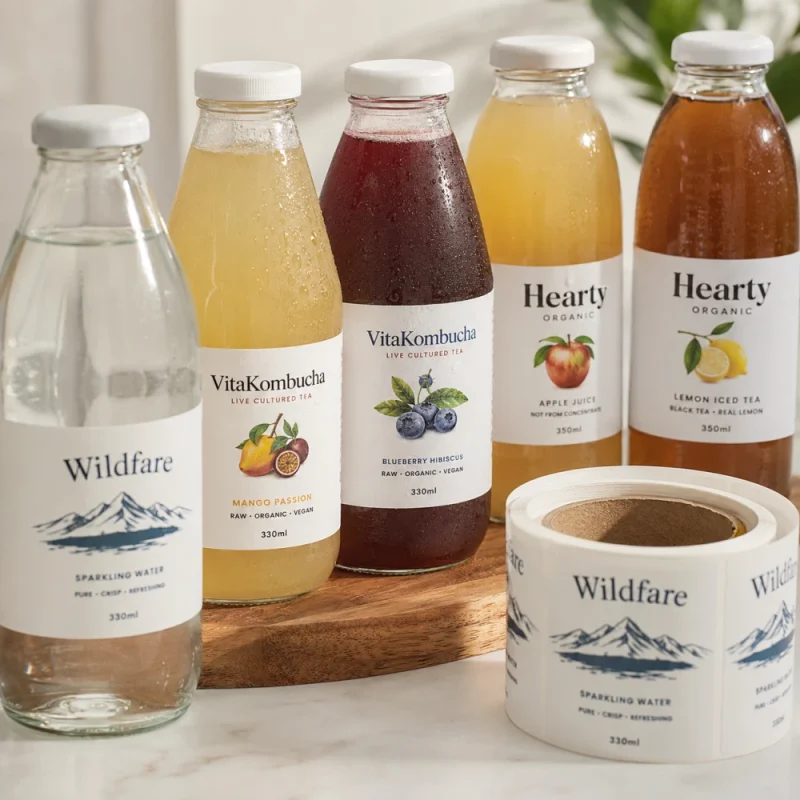
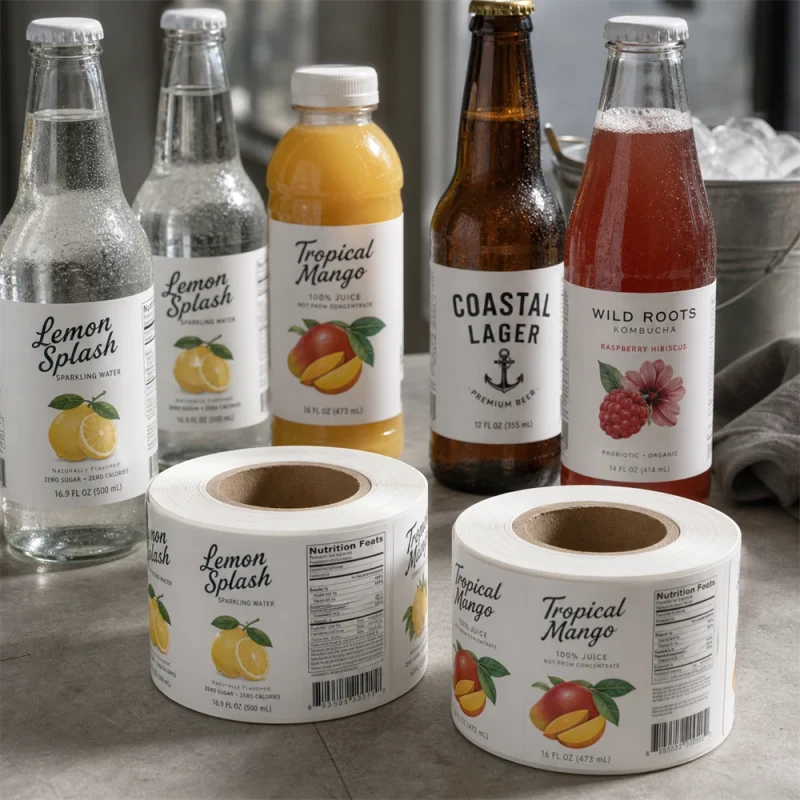
Beverage Bottles in Ice Buckets
Wine, beer, juice, kombucha, RTD coffee bottles spend hours in direct ice-water contact. Film + acrylic adhesive + laminate survives the bucket.
Refrigerated with Condensation
Cold bottles and jars sweat when removed from the fridge. Paper absorbs moisture and warps; films stay flat and legible through every condensation cycle.
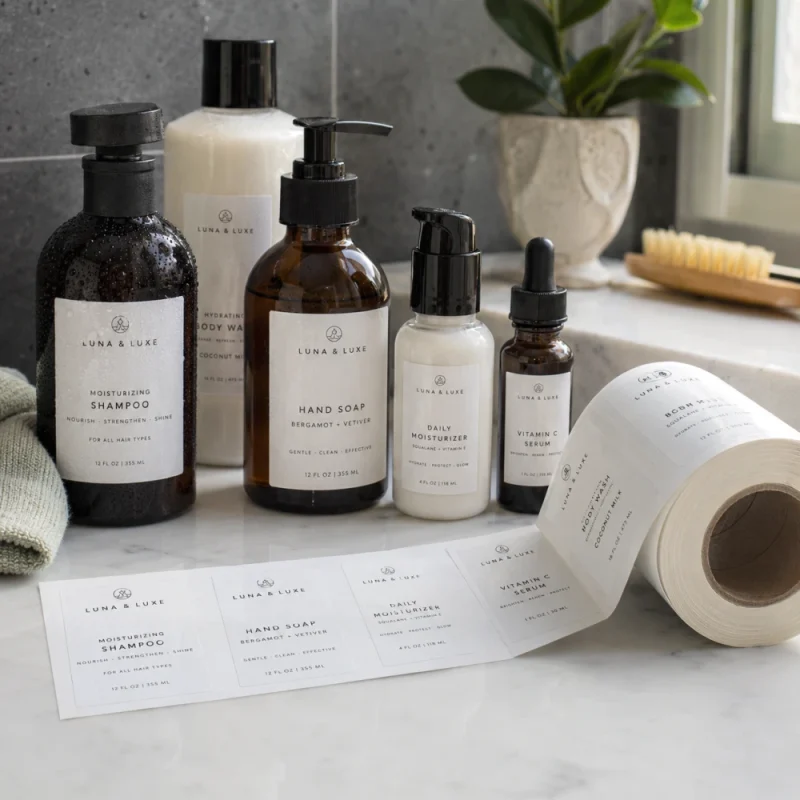
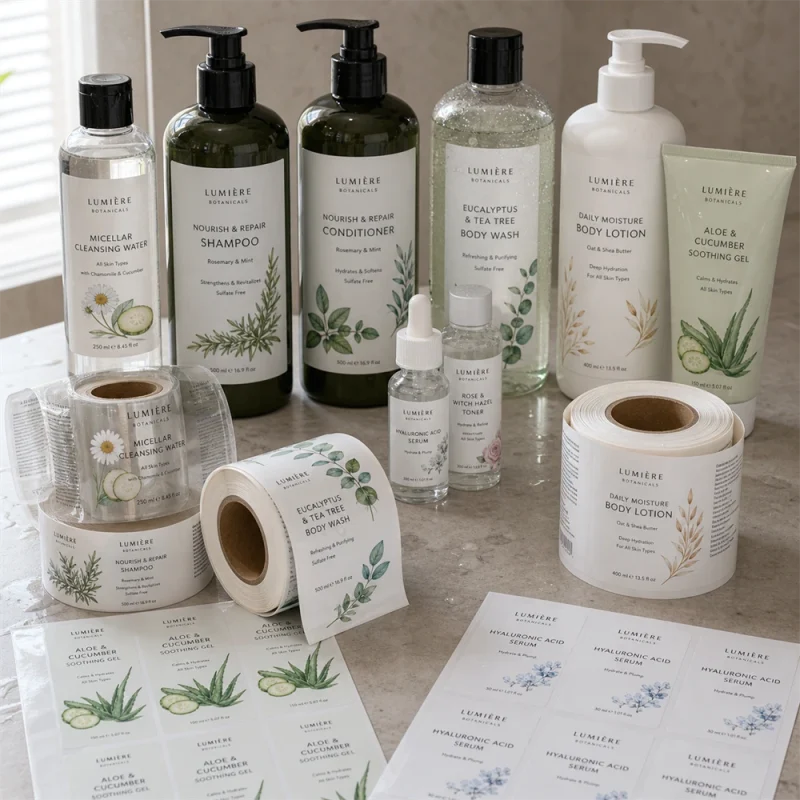
Cosmetic & Skincare Bottles
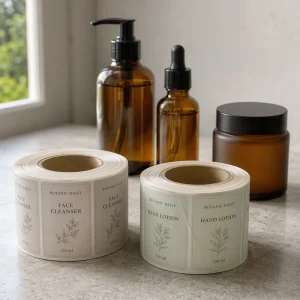
Shampoo, lotion, serum, toner live in wet bathrooms and get repeated handling. Waterproof films resist splash, oil transfer, and surface abrasion.
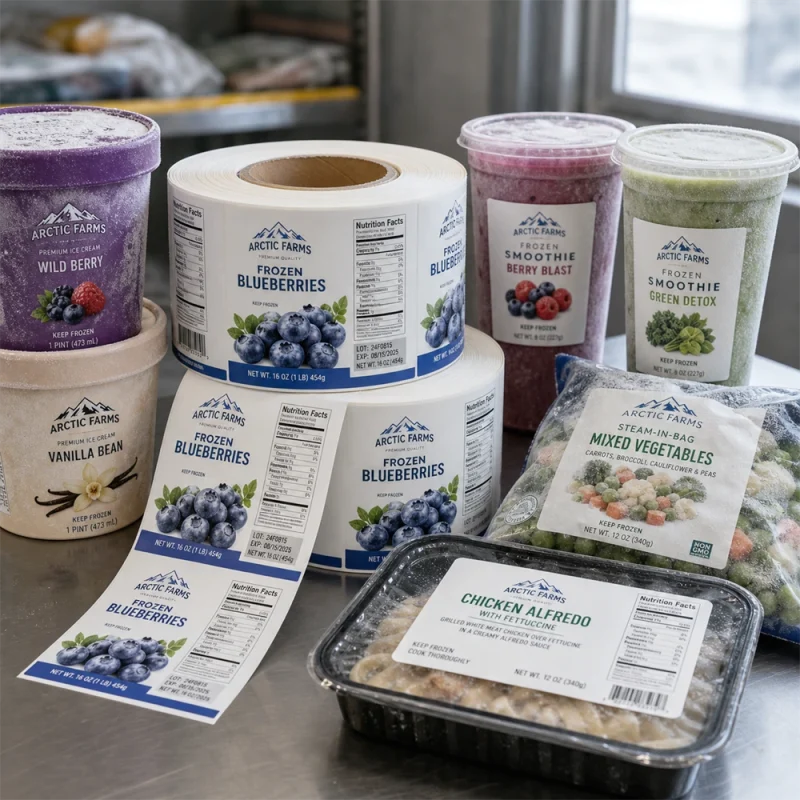
Frozen & Chilled Food
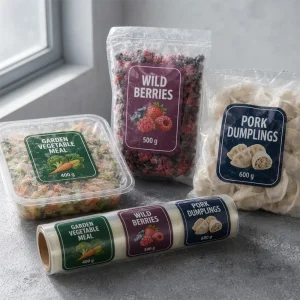
Ice cream, frozen meals, chilled dips. Pair waterproof film with freezer-grade adhesive (−20 °C / −4 °F) so labels don't flag or peel in the cold chain.
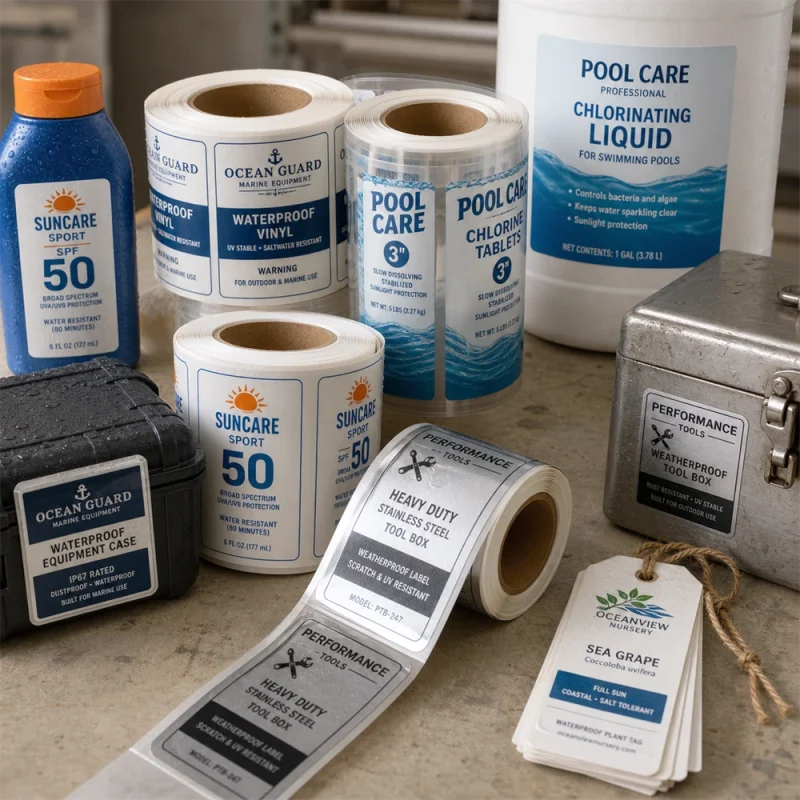
Outdoor & Industrial
Plant tags, equipment labels, chemical drums, outdoor retail. UV-stable inks on vinyl maintain legibility for 12+ months of direct rain and sun.
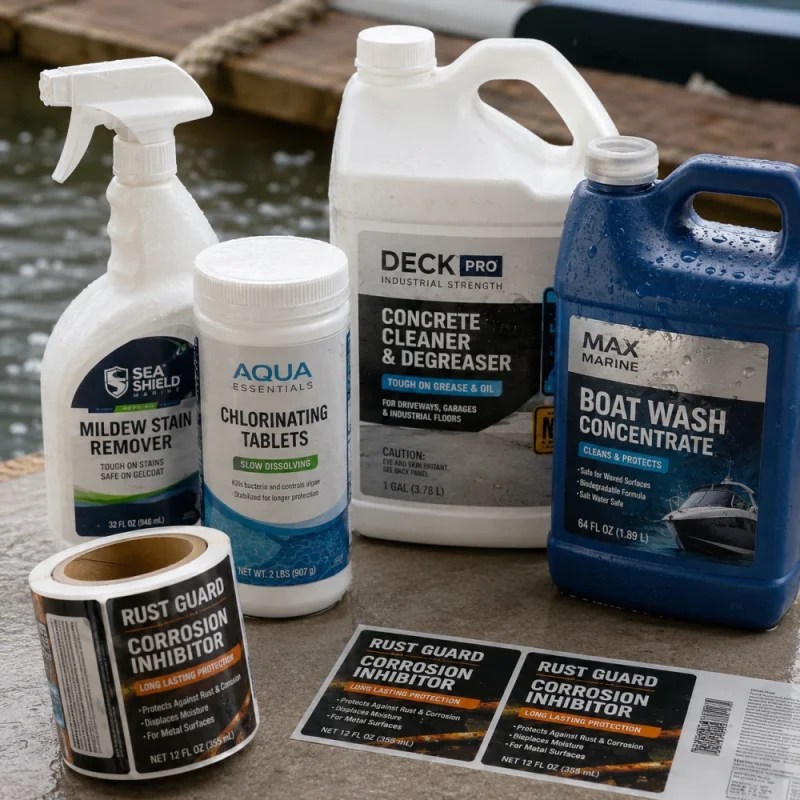
Marine & Poolside
Sunscreen, pool chemicals, boat supplies, marine gear face repeated water immersion. Vinyl and PET with UV-stable inks deliver durable performance.
Pick the Right Waterproof Film in 30 Seconds
All six materials below are non-absorbent films rated Excellent for water resistance. Choose by clarity, rigidity, and intended use.
Three Tiers, Five Attributes — At a Glance
Compare waterproof tiers across the attributes that decide field performance. Bars are normalized 0–100 from internal test data.
Coated Paper + Laminate
Splash OnlyA budget bridge for semi-wet applications. Substrate still absorbs moisture over time — not for sustained exposure.
BOPP / PET Film
RecommendedThe mainstream waterproof choice for beverages, cosmetics, and refrigerated products. Non-absorbent film + acrylic adhesive.
Vinyl / Metallic PET
PremiumHeavy-duty outdoor, marine, and premium branding. Vinyl adds flexibility + UV stability; metallic PET adds shelf standout.
Where Waterproof Labels Perform Best
Eight product categories that should default to film face stocks. Gold-bordered cards indicate the highest-volume use cases.
Beverage
Water, juice, beer, wine, kombucha, energy drinks, RTD coffee. Condensation and ice-bucket resistant.
Food
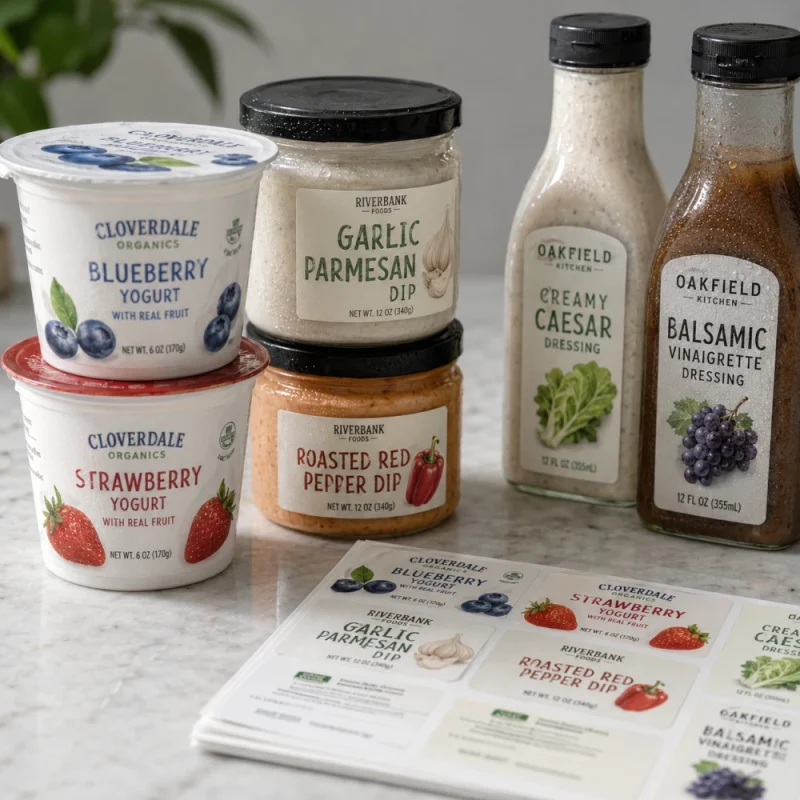
Sauces, dressings, marinades, yogurt, dips, refrigerated meals. Moisture and oil resistant.
Beauty & Cosmetics
Shampoo, conditioner, body wash, lotion, serum, toner. Bathroom splash and oil contact.
Daily Chemical
Cleaning sprays, detergents, disinfectants, hand sanitizer. Chemical splash resistant.
Frozen Food
Ice cream, frozen meals, vegetables. Pair with freezer adhesive for −20 °C performance.
Outdoor & Industrial
Plant tags, equipment, chemical drums, marine. UV-stable vinyl for long-term exposure.
Candle & Home
Room sprays, diffusers, candle jars in humid rooms. Waterproof film prevents edge curling.
Retail & Logistics
Outdoor retail tags, humid-climate shipping labels, warehouse bin labels. Moisture durable.
What "Waterproof" Actually Means — and Doesn't
Six field realities that separate working labels from peeling labels. Read these before specifying your next run.
Waterproof vs Water-Resistant
True waterproof labels use film face stocks (BOPP, PET, vinyl) that do not absorb water at all. Water-resistant labels use coated paper with limited moisture protection. For sustained exposure, always choose film.
Lamination Extends Life
A gloss or matte laminate over printed ink provides an extra barrier against abrasion, chemicals, and UV. For ice bucket or outdoor applications, lamination is strongly recommended — a low-cost insurance policy.
Adhesive Matters
Even with a waterproof face stock, the wrong adhesive can fail under moisture. Permanent acrylic adhesives bond well to glass and plastic under wet conditions. For freezer use, pair with a freezer-grade adhesive.
Surface Energy Affects Bonding
Low-surface-energy plastics (certain HDPE and PP containers) are harder to bond. We can recommend a high-tack adhesive or corona treatment for difficult surfaces.
Not for High-Temperature Wash
Waterproof labels resist ambient and cold water. They are not designed for commercial dishwashers or autoclave conditions. For returnable-container programs, use removable waterproof labels.
UV Exposure Consideration
Waterproof does not automatically mean UV-proof. For outdoor sun exposure, specify UV-stable inks and vinyl material to prevent fading over months.
Waterproof Labels in Three Formats
Same film materials, same adhesives — choose the format that fits your application volume and equipment.
Waterproof Roll Labels
For batch application and machine labeling. Specify core size, rewind direction, and outer diameter for your applicator.
Waterproof Sheet Labels
For small-batch and manual application. Ideal for startups and sample testing before scaling to rolls.
Waterproof Stickers
For logo stickers, promotional decals, outdoor stickers, and product seals. Die-cut or kiss-cut on vinyl or BOPP.
Six Mistakes That Turn Waterproof Labels into Field Failures
Each mistake below is paired with the corrective action we recommend on every project.
Choosing Paper for Wet Environments
The single most common mistake. Paper absorbs moisture, causing curling, ink bleed, and label failure. Always choose BOPP or PET for products that will be wet or refrigerated.
Skip Lamination on Beverages
Without a protective overlaminate, printed ink on film labels can scratch off during shipping, in ice buckets, or from repeated handling. Lamination is low-cost insurance for high-value products.
Wrong Adhesive for Cold Surfaces
Standard permanent adhesive may not bond to cold or frosted bottles. If applying at refrigeration temperatures, specify a low-temperature or freezer-grade adhesive.
Not Testing the Real Environment
Lab tests do not always replicate real-world conditions. Always test labels on your actual containers in your actual storage, transport, and display environment before committing to production.
Ignoring Surface Energy
Some plastic containers (HDPE, PP) have low surface energy and resist standard adhesives. Test adhesion on the actual container material before ordering large quantities.
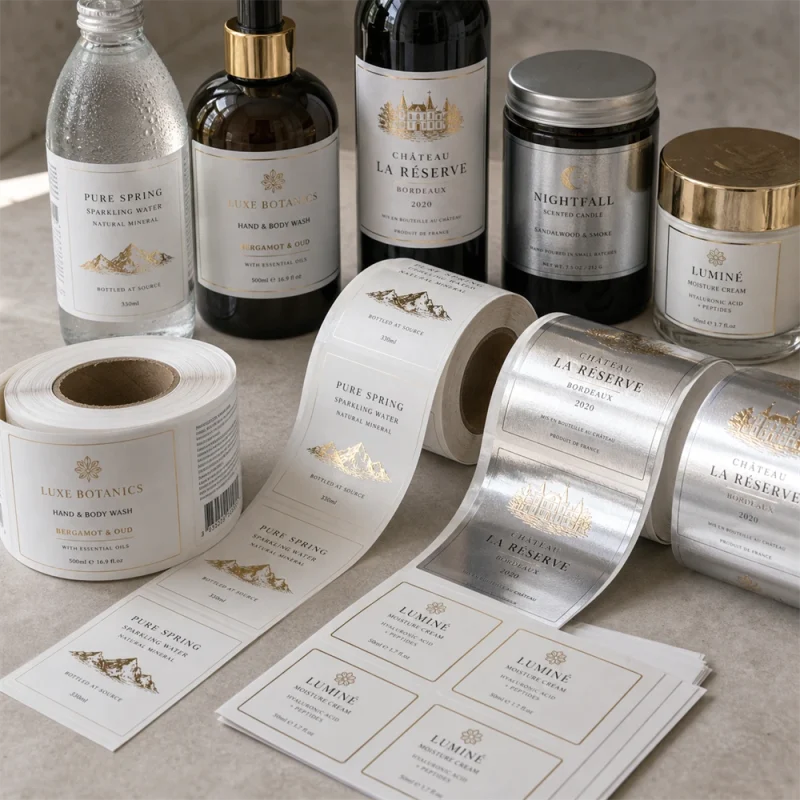
Assuming Foil = Waterproof
Foil stamping alone does not make a label waterproof. Foil must be applied to a waterproof film base with appropriate adhesive and optionally sealed under laminate.
When Waterproof Labels Are — and Aren't — the Right Call
- Product will be iced, refrigerated, or served cold (beverage, food).
- Container lives in a wet environment (bathroom, kitchen, pool).
- Product is handled repeatedly with wet or oily hands.
- Label must survive outdoor UV, rain, or marine splash.
- Packaging is a film or glass container that needs permanent bond.
- Product is a dry, room-temperature retail box (paper is fine).
- Label must be easily removable by the end consumer.
- Container goes through commercial dishwashers or autoclave.
- Budget is the primary decision factor and exposure is minimal.
Pre-Flight Checklist Before You Order
Artwork Setup
- Convert to CMYKUse CMYK color mode; spot colors only for brand-critical hues. RGB previews will shift on press.
- 300 DPI minimumRaster images at final print size. Vector artwork preferred for type and logos.
- Add 3 mm bleedExtend background art 3 mm beyond die-line on all sides. Keep critical text 3 mm inside.
- Outline fontsConvert all type to outlines before export. Embed or package linked images.
- Export PDF/X-1aPress-ready PDF with trim marks. Flatten transparency before export.
Container & Adhesive
- Know your container materialGlass, PET, HDPE, PP — surface energy drives adhesive choice.
- Application temperatureBelow 4 °C / 40 °F? Specify freezer-grade adhesive upfront.
- Test before productionRequest free samples; 48-hour real-environment test beats every lab spec.
- Specify laminateGloss for vibrancy; matte for soft luxury; both add abrasion insurance.
Common Waterproof Label Sizes
- 2" × 2"51 × 51 mm · Small bottle front
- 3" × 2"76 × 51 mm · Cosmetic bottle
- 3" × 4"76 × 102 mm · Wine bottle front
- 4" × 3"102 × 76 mm · Sauce jar front
- 4" × 6"102 × 152 mm · Bath & shower bottle
- 5" × 7"127 × 178 mm · Shipping / bin label
- 8" × 10"203 × 254 mm · Sheet / chemical drum
- Custom die-cutAny shape, any size · Standard
- Roll formatUp to 11" wide · 100,000+ run
All sizes available in White BOPP, Clear BOPP, White PET, Clear PET, White Vinyl, Silver PET. Need a custom die-line? Request a quote and we'll send a PDF template in 24 hours.
From Proof to Pallet — the LabelsAgent Workflow
Standard Production
Most waterproof roll orders ship in 4-6 business days after proof approval. Rush service available for urgent launches.
Free Sample Rolls
Test the actual material, adhesive, and finish on your container in your real environment before committing. No charge, no obligation.
Worldwide Shipping
Door-to-door air and sea freight from Fuzhou, China. We handle export docs, you track to dock. Typical 10–15 days by sea to West Coast.
Waterproof Label Frequently Asked Questions
What makes a label truly waterproof?
Will waterproof labels survive in an ice bucket?
Can waterproof labels handle condensation on cold bottles?
Are paper labels ever waterproof?
Can I get waterproof labels with foil stamping?
Get Waterproof Labels That Survive Real Conditions
Tell us about your product, container, and environment. We will recommend the right film material, adhesive, and finish — backed by free samples and a 24-hour quote.
No reviews yet.
Write a Review
You must be logged in to post a comment.